Who Has Already Built One
Biological methanation did not begin with a breakthrough. It began with a one megawatt plant in Copenhagen in 2016 that is still running, and nine companies have been building quietly from there.
One Plant, Still Running
Electrochaea was founded in Germany in 2012. In 2016 it switched on a one megawatt plant in Copenhagen called BioCat, rated at 200 normal cubic metres of methane an hour, running a pure culture of Methanothermobacter thermautotrophicus held at 63 degrees Celsius and 10 bar. That plant is still running. Ten years is not long in infrastructure and it is very long in a technology where most published work describes a laboratory reactor. The question that decides whether something gets built is not whether the chemistry works. It is whether anyone has held a temperature, a pressure and a living culture inside an economic band for a decade and come out the other side. BioCat operates at a technology readiness level of 8. Nine means commercial. Eight means a real system built and run at real scale, and it is the number that separates a company from a demonstration. The market did not start with a breakthrough. It started with a plant that has not stopped.
Three Reactor Designs, One Problem
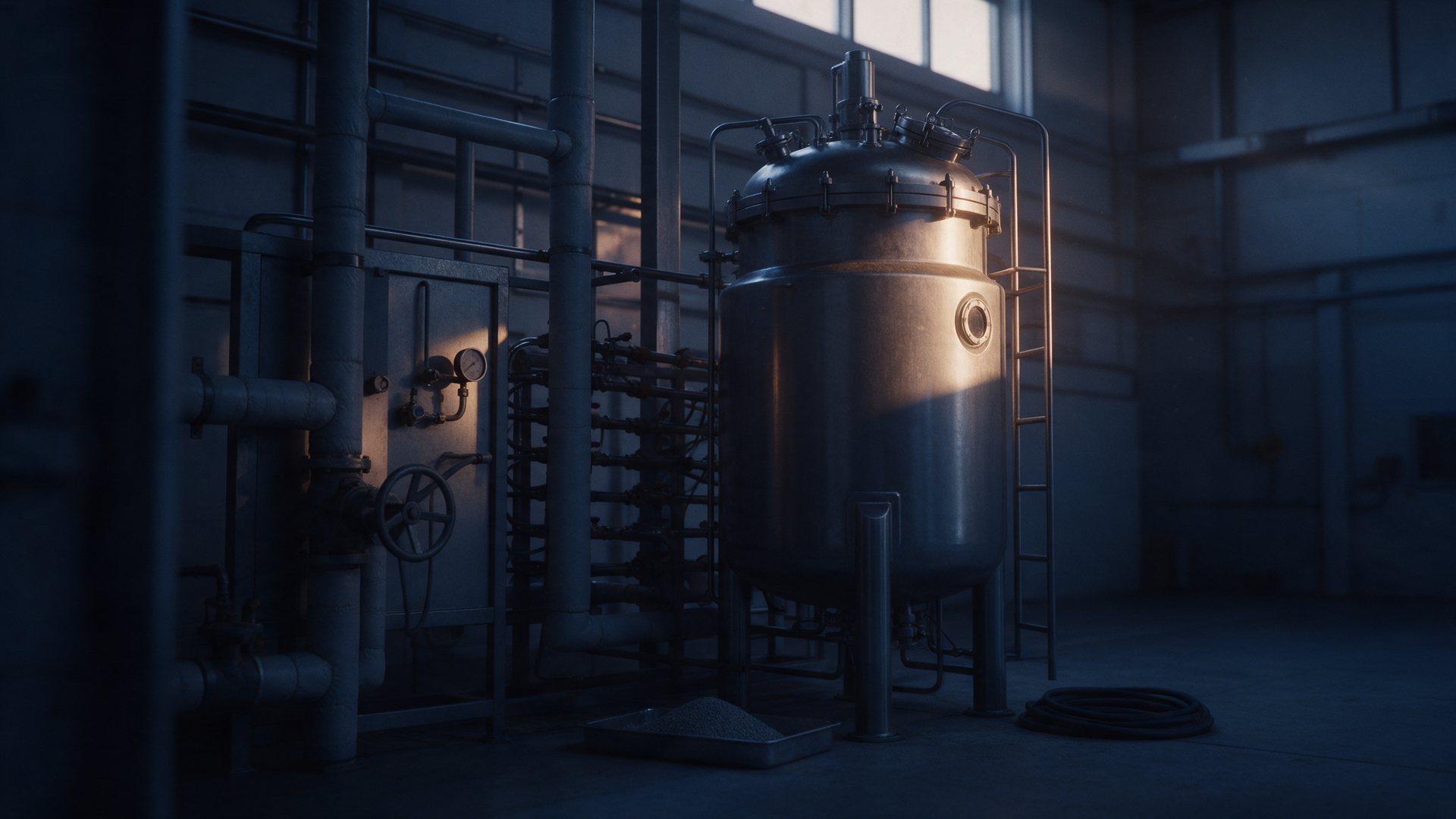
The nine companies in this market are not nine variations on one idea. They are three reactor designs with three answers to the same problem: keeping a living culture in contact with two gases that have to dissolve before anything happens. The stirred tank is the industrial fermenter. Electrochaea and Kanadevia Inova both run continuously stirred reactors with gas sparged into a mixed liquid. Kanadevia, formerly MicrobEnergy, built a 300 kilowatt unit at Allendorf in Germany in 2015 and a 140 normal cubic metre an hour plant at Werlte in 2018. Both sit at a readiness level of 8. The solid state reactor has no liquid volume to stir. Q Power in Finland holds a marshland mixed culture at 50 to 70 degrees and near ambient pressure. Its 20 megawatt electrolysis project at Harjavalta entered commissioning in 2025. The trickling filter wets a packed bed with a thin film. Biogasclean in Denmark runs under 65 degrees and under 200 millibar. Its Sonderborg plant has produced 33 gigawatt hours a year of e-methane since 2023. Pick the reactor that matches your gas and your site. Pick the wrong one and you have paid the capital cost of the wrong answer to a mass transfer problem.
The Ladder Is Not A Ranking
Readiness levels across the nine do not sort into a leaderboard. They sort into four pairs. Two companies at level 8 with plants operating. Two at level 7 with plants commissioning. Two at level 6 with pilots that have been piloted for years. Two at level 5. MicroPyros in Germany works with more than 70 archaea strains between 50 and 70 degrees and has stayed at level 6. Storengy, owned by ENGIE, has run a 250 kilowatt demonstration called MethyCentre in France at level 6. Krajete in Austria screens selected archaea at level 5. RAG Austria has taken the opposite route entirely. RAG injects hydrogen and carbon dioxide into a depleted underground reservoir and lets the native microbes do the conversion in place, at reservoir temperature and reservoir pressure. The pilot is level 5 and has been funded through the Underground Sun programme since 2016. That is the entry worth watching, because it removes the reactor from the capital cost. It also removes the ability to control anything. The probability that in-situ conversion works at a useful rate is not zero, and nobody has published a decade of it yet.
The Only One At Nine Is Not Biological
Waga Energy in France sits at the top of the list at a readiness level of 9, with more than 30 WAGABOX units built and an initial public offering in 2023. Its process is not biological. It cleans up methane that already exists rather than manufacturing new methane, and it sells into a market where the gas is being produced whether anyone captures it or not. The only question there is whether the molecule goes into a pipeline or into a flare. The biological companies are selling into a different market entirely. Their methane is assembled from hydrogen and carbon dioxide, and both of those cost money before a single cubic metre is sold. Of the nine, the only one at commercial readiness is the one that does not use a microbe.
The market did not start with a breakthrough. It started with a plant that has not stopped.
The Order It Actually Grew In
The dates tell you more than the technology table does. Electrochaea was founded in 2012. Allendorf was built in 2015. BioCat came on in 2016. Werlte followed in 2018. Then the pattern changes from construction to consolidation. Hitachi Zosen acquired MicrobEnergy in 2021 and the business now trades as Kanadevia Inova. Biogasclean acquired Cycle0 in 2024. In 2025 the first full-scale plant appears on the record. Glansager in Denmark, operated by Nature Energy with Biogasclean, runs 12,000 normal cubic metres of methane a day and is described in the literature as the first of its kind by Chatzis in 2024. The Harjavalta project from Q Power moved into commissioning the same year. The rest of the list is dated 2027. Electrochaea targets a 10 megawatt BioCat at Roslev in Denmark, a Japanese project with Hitachi, and a framework agreement with Baker Hughes covering sites up to 75 megawatts each. Four plants in ten years, two acquisitions, and everything else is a target date.
Thirty Five Plants Out Of Seventeen Hundred
The European Biogas Association and Gas Infrastructure Europe counted 35 operational e-methane plants in Europe in 2023 with a combined capacity of 449 gigawatt hours a year, and projected 3,000 gigawatt hours a year by 2027. Put the first number against the wider fleet. Europe had 1,678 biomethane plants as of June 2025, and the EU produced about 3.5 billion cubic metres of biomethane in 2023 against a REPowerEU target of 35 billion cubic metres by 2030. The European Commission puts the investment required to close that gap at EUR 37 billion to EUR 83 billion. Thirty-five plants out of a fleet of 1,678 is two per cent. The technology is not early. It is marginal, and the capacity growth being asked for is from 449 to 3,000 gigawatt hours a year inside four years. The policy stack is piled in its favour. REPowerEU set the 35 billion cubic metre target in May 2022, RED III raised the renewable energy target to 42.5 per cent by 2030, the Net Zero Industry Act names biomethane as a net zero technology, German feed-in tariffs pay for injection, and carbon pricing at EUR 64 a tonne of carbon dioxide hands the biological route about EUR 10 to EUR 15 a megawatt hour of cost advantage against fossil gas. Subsidy is not the constraint. The cost of the feedstock is.
The Hydrogen Sets The Price
Hydrogen is more than 75 per cent of the total cost of e-methane, and it is priced at EUR 4 to EUR 8 a kilogram today against a projection of EUR 2 to EUR 3 by 2030. Everything the biological route controls is the small part of the bill. Biocatalyst capital cost runs EUR 20 to EUR 200 a megawatt hour depending on scale, heading to EUR 15 to EUR 150 by 2030. Operating cost is about EUR 13 a megawatt hour, heading to roughly EUR 10. Add it up and levelised e-methane lands between EUR 170 and EUR 680 a megawatt hour now, against a projection of EUR 150 to EUR 300 by 2030. Dutch gas traded between EUR 30 and EUR 50 a megawatt hour over the same period. That is the whole argument. At EUR 170 a megawatt hour against gas at 30, the biology is not competing on the molecule. It is competing on the gap between EUR 3 hydrogen and EUR 8 hydrogen, and on a carbon price that has to keep rising. The cheapest way to make e-methane is still to buy hydrogen cheaply.
What I Would Ask Before Funding One
I would fund the reading, not the reactor. Three questions, in this order. Who owns the design, and is it licensed or copied. Has the plant run through a winter, because a culture that holds 63 degrees in July is a different animal in January. And what did the operating cost actually come out at in year three, when the nutrient bill, the maintenance and the labour are no longer estimates. Entrade built 200 wood gasification machines across the UK and Europe, and the tenth machine did not look like the first. The gap between those two units was where the money went. I signed a personal guarantee on a company that folded on Christmas Day 2008 and restructured a industrial group, and neither file was decided by the technology. The probability that the tenth plant looks like the first is not zero. Most people are pricing it at zero, which is exactly why the first plant is cheap to promise and the tenth is where the capital goes. The chemistry has been ready since 2016. What the market has not yet produced is a plant that has run long enough for the operating cost to stop being an assumption.
Three reactor designs, one problem: keep a living culture inside an economic band.
The map is dead. Nobody told you.
Bali State of Mind is the survival guide for the collapse of everything you were taught to believe.
Beyond this book
Building the same thing somewhere else.
Julien Uhlig is available for advisory work, board seats and media appearances. Write to media@exventure.co.
The academy that trains the operators, across every company in the group, is EX Epic Academy - 25,000 applications, 12 per cohort, 200+ alumni across 19 countries. academy.epicsolutiongroup.com
18-20 November. Online, Las Palmas, Bali.
Three days on what happens to work, capital and institutions when the map stops matching the ground. Seats are limited by cohort.
ex-aisummit.com →