The Night the Wall Fell in My Living Room
On the ninth of November 1989 I was thirteen, watching the Berlin Wall come down on a television in Bremen, and the sound coming out of that set was not cheering. What I understood years later, standing in a harbour in Rostock, is that the most permanent-looking structure in the world can vanish between breakfast and dinner. The people who get crushed are the ones who priced that probability at zero.
The Television in Bremen, November 1989
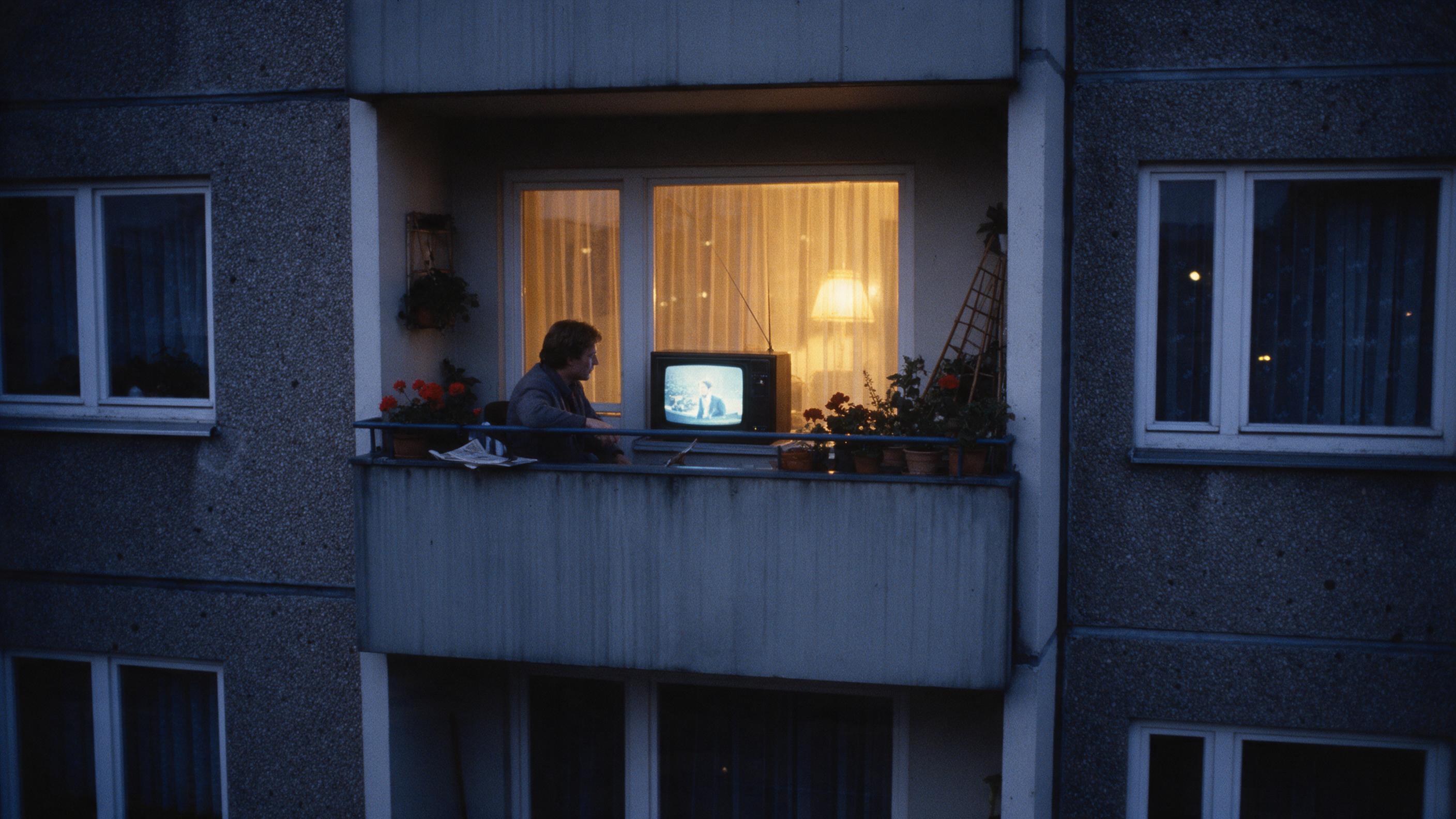
The television was on in our living room in Bremen, a Hanseatic city-state in northern Germany. I was thirteen. On the screen, people were climbing the Berlin Wall. Not soldiers, not politicians. Teachers, bus drivers, grandmothers, going over concrete and razor wire like it was a fence in somebody's garden. The sound was not cheering. It was a low, animal wailing, thirty years of grief coming out in a single breath. Old women collapsing into the arms of strangers. Men standing with their hands at their sides, shaking, unable to move. Young men with hammers swinging at the most surveilled border in human history, and the concrete coming down in chunks. My mother was in the room. She wasn't crying. My mother doesn't cry.
We Drove East That Night
Nobody said let's plan this. My parents had been divorced for years by then, so it was just the two of us, and she looked at me the way you look at someone when you both already know what happens next and the only question is who says it first. We got in the car and drove east. The roads were terrible. Cracked asphalt, potholes deep enough to swallow a wheel, decades of neglect you felt in your spine with every kilometre. Almost no other cars, just the occasional Trabant puttering past with a two-stroke engine that sounded like a lawnmower with ambitions. The streetlights got dimmer. The buildings got grayer. Faded apartment blocks, empty streets, a propaganda billboard still standing and suddenly absurd. Like driving into a photograph from another decade.
Rostock Harbour, Full of People
We drove to Rostock, Bremen's partner city on the Baltic, about two hundred kilometres east. Same latitude, same flat northern landscape, same Low German roots. For twenty-eight years the road between those two cities had run through an armed border. That night it was just a road again. The harbour held thousands of people, packed along the waterfront, spilling out of doorways, pressed together in the cold November air, and you could not tell East Germans from West Germans anymore. That was the whole point. Along the quay stood the restaurants that had been reserved for Party officials for forty years, the places a dockworker or a nurse walked past with the curtains drawn. Every one of them was overflowing with regular people, sitting under white tablecloths they had never touched, laughing the deep laugh of the absurd.
The Old Woman's Grip
An old woman took hold of my arm. Seventy, maybe older, and small, and she was shaking with a strength that surprised me. Rostock is northern German, the same Low German roots as Bremen, so she sounded like home. Same flat vowels, same clipped consonants. She started to say something to me and she could not finish it. Her mouth was moving and no words were coming out, just this broken keening sound. I was thirteen. I had nothing to say to that. So I held her arm and I cried with her. What she meant was: I never thought I would see this. I built everything I have inside that system. I loved inside it. I raised children inside it. And now it is gone, and I am seventy, and I wasn't ready.
It wasn't concrete that held the wall up. It was the collective belief that it would always be there.
Nobody Saw It Coming
The Berlin Wall stood for twenty-eight years. Governments were built around it. Military budgets were justified by it. Careers were made defending it. Intelligence agencies existed to study it. On the morning of the ninth of November 1989, not one person on this planet knew that by nightfall the world would be fundamentally and irreversibly different. Not the CIA. Not the KGB. Not the academics who had spent their careers analysing it. The probability of a divided Germany lasting forever was never 100%. It was maybe 85%, maybe 90%. And the people who got crushed were the ones who lived as if it were 100%. That is the whole framework. Not will this happen, but what is the probability, and am I positioned for it.
Two Lehman Moments, Five Years Apart
In 2003 I was on the top floor of Lehman Brothers in a conference room when the power went off. No smartphones, no Twitter, no way to know in the first thirty seconds of darkness whether this was another attack. Men who spent their days moving billions of dollars looked like children. The masks came off in the time it takes a light to go out. We walked down thousands of stairs in the dark. That night we lit candles at Caffè Taci and sent someone across to Columbia's chemistry labs to fetch dry ice in a stolen shopping cart, and suddenly the beer was cold again. Five years later Lehman collapsed for real and the lights did not come back on. Same building. Same name on the door. The only difference was that the second time, nobody had priced the probability correctly.
Disaster is the norm. You have been living in an exception.
The map is dead. Nobody told you.
Bali State of Mind is the survival guide for the collapse of everything you were taught to believe.
Beyond this book
Building the same thing somewhere else.
Julien Uhlig is available for advisory work, board seats and media appearances. Write to media@exventure.co.
The academy that trains the operators, across every company in the group, is EX Epic Academy - 25,000 applications, 25 seats per cohort, 210 alumni across 19 countries. academy.epicsolutiongroup.com
18-20 November. Online, Las Palmas, Bali.
Three days on what happens to work, capital and institutions when the map stops matching the ground. Seats are limited by cohort.
ex-aisummit.com →