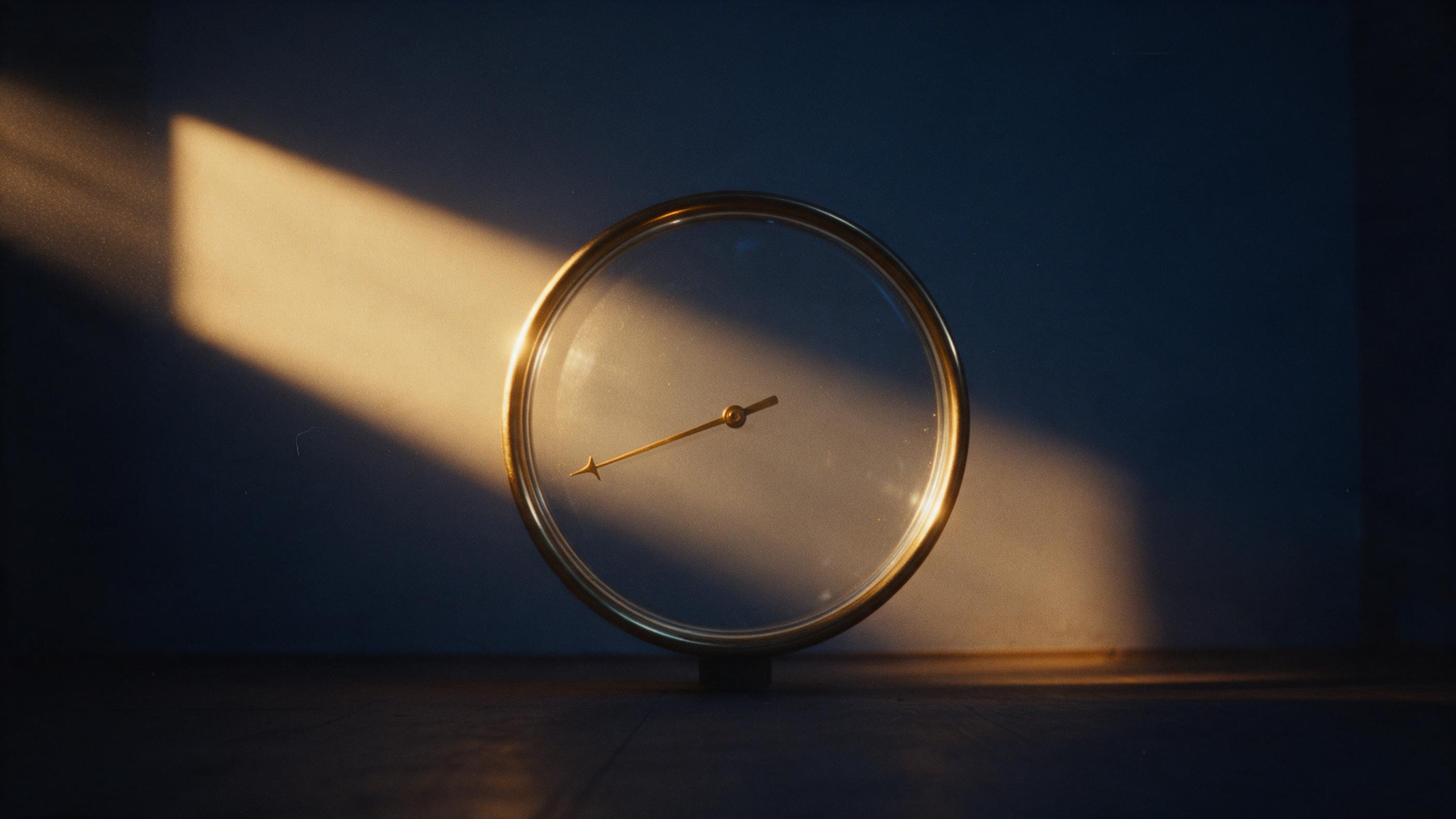
The Scorecard Decides The Ship
A film is not approved by taste. It is approved by 9 checks, 8 scored dimensions and 1 number, and the number is settled before the first frame moves.
Nine Stages And A Number On Every One
The workflow is not a mood. It is 9 stages, and every 1 of them ends in something you can hold: a beat map, a character bible, a shot list, a folder of approved stills, a gate result, an animation, a grade, a cut, a master. A song first. Read the lyric before anything is rendered, because no song means no film. Pull the 1 feeling the whole piece serves, then decide whose point of view carries it. Objective or subjective is 1 decision and it steers all 9 stages after it. Then the shot cards. Then the stills, rendered before a single second of motion, because a moving shot built on an unapproved frame is 24 mistakes a second, running for as long as the clip lasts. The order is the method. Script, story, shot list, stills, gate, animate, grade, cut, ship. Skip 1 of those 9 and you do not save the time. You move the cost to the edit, where it is 10 times harder to pay. Every stage carries a number too, so you always know where you are. 90 is the floor for a still or a shot. 95 is the floor for the writing. 100 is the ceiling nobody reaches and everybody aims at.
A Blank Field Is A Guess
A shot card carries 22 fields: size, angle, lens, composition, light source, light position, colour temperature in Kelvin, movement, film look, impact, the 1 detail that carries the shot, the inner monologue, and the rules for body, hands and face. No blanks. Not 1. A blank field is a guess handed to the model, and a guess is what a generic shot looks like from the inside. Fill 21 of the 22 and the render will invent the 22nd in the dullest way available to it. Lock 3 things before any render starts: the identity block, the lens, and the temperature. Write the temperature as a figure, not a feeling. 5600 Kelvin for open daylight, 3200 for a tungsten room, and the same figure on every shot inside that scene. Set the 180 degree line per scene and never cross it. 2 negative layers run underneath the whole set. Tier 1 on every render, tier 2 where the material needs it. Keep the rejects instead of deleting them, because a rejected frame tells you which of the 22 fields was wrong.
The Gate Is Nine Checks, Not A Feeling
Before anything animates, every approved still runs the same 9 checks: identity, lens, light, location, look, anti-AI, continuity, impact, grade. Each 1 against the still, and each 1 against every other still in the set, because drift lives across the set and not inside 1 frame. 7 of those 9 can be settled by looking twice. The other 2 need a colder eye, so the vision gate runs them and returns a verdict rather than a shrug. Automate it. A hand-check at 2 in the morning is not a check. Every fail gets a name. Identity drift in the hands. Light 1 step off in temperature. A cut that breaks the 180 degree line. Then you re-render tighter and run the same 9 checks again. The gate number is 90. Below it, the still does not reach the timeline, however good it looked on the phone. Green stills only, and green means scored, not liked.
Eight Dimensions And One Number That Ships
The scorecard is filled per film, not per shot. 8 dimensions and an overall: identity consistency across the set, light motivation and temperature, composition and framing, continuity across the 13 rules, anti-AI cleanliness, impact, grade consistency, and cut quality. Score each 1 out of 100. A total under 90 does not ship, whatever the deadline says. That is the entire function of the document. It removes the argument, because a film at 84 is not a matter of taste. It is 6 points short, and the card names the dimension that gave the 6 away. Fill it honestly and it does 2 jobs at once. It shows where the film is leaking points, and it stops the meeting from becoming a conversation about preference. The same card works for a 30 second clip and a 30 minute piece. The dimensions do not shrink with the runtime.
The order is the method. Skip a stage and the cost moves to the edit, where it is harder to pay.
One Palette, One Reason Per Cut
Capture flat, then grade to 1 palette for the whole film. Mood in the lift, warmth in the gain, skin protected, and no drift between 2 neighbouring cuts. If the tint is wrong, fix it in post. Regenerating a good shot to correct the colour is how a film loses a week and gains nothing. Then cut. Read the loudness envelope before you touch the timeline, and lock the visual climax to the loudness peak, so the loudest second of the song and the biggest frame of the film land together instead of 4 seconds apart. Give every shot its own duration. Let a normaliser decide the weight and the cut that used to land on the beat slides off it. Every cut carries a named reason from the 13 rules: cut on action, hold the 180 degree line, keep the eyelines, J and L cut the sound. The opening image states the theme. The last shot cuts hard to black. Ship 2 files: the master, and a platform copy small enough to travel, under 50 megabytes.
Whose Eyes, And What Should They Feel
If 1 line survives from this piece, make it the question asked of every shot before it is final. Whose eyes, and what should they feel? 1 question, and every field on the card is an answer to it. Leave 1 field blank and the model answers it for you, in the most average way the training data allows. Fill all 22 and the frame has an author in it. Built companies across twelve countries. Restructured a industrial group. Deployed 210 energy systems across Africa and Asia. Took a company through a Frankfurt IPO. Sixteen years of field work from rural Nigeria to Fukushima. Entrade built 200 wood-gasification machines across the UK and Europe. 393 pages in paperback and Kindle, published 8 April 2026. Not 1 of those was approved by taste either. Every 1 of them was scored, and the score decided whether it shipped. The probability that a film built out of order scores above 90 is close to 0. The probability that 1 more pass over the card fixes it is close to 1. Most people price both at 0 and find out the difference in the edit, on the night before the delivery. Taste does not ship the film. The score does. Fill the card, run the 9 checks, fill the 8 dimensions, and let the number decide.
A blank field is a guess handed to the model.
The map is dead. Nobody told you.
Bali State of Mind is the survival guide for the collapse of everything you were taught to believe.
Beyond this book
Building the same thing somewhere else.
Julien Uhlig is available for advisory work, board seats and media appearances. Write to media@exventure.co.
The academy that trains the operators, across every company in the group, is EX Epic Academy - 25,000 applications, 12 per cohort, 200+ alumni across 19 countries. academy.epicsolutiongroup.com
18-20 November. Online, Las Palmas, Bali.
Three days on what happens to work, capital and institutions when the map stops matching the ground. Seats are limited by cohort.
ex-aisummit.com →