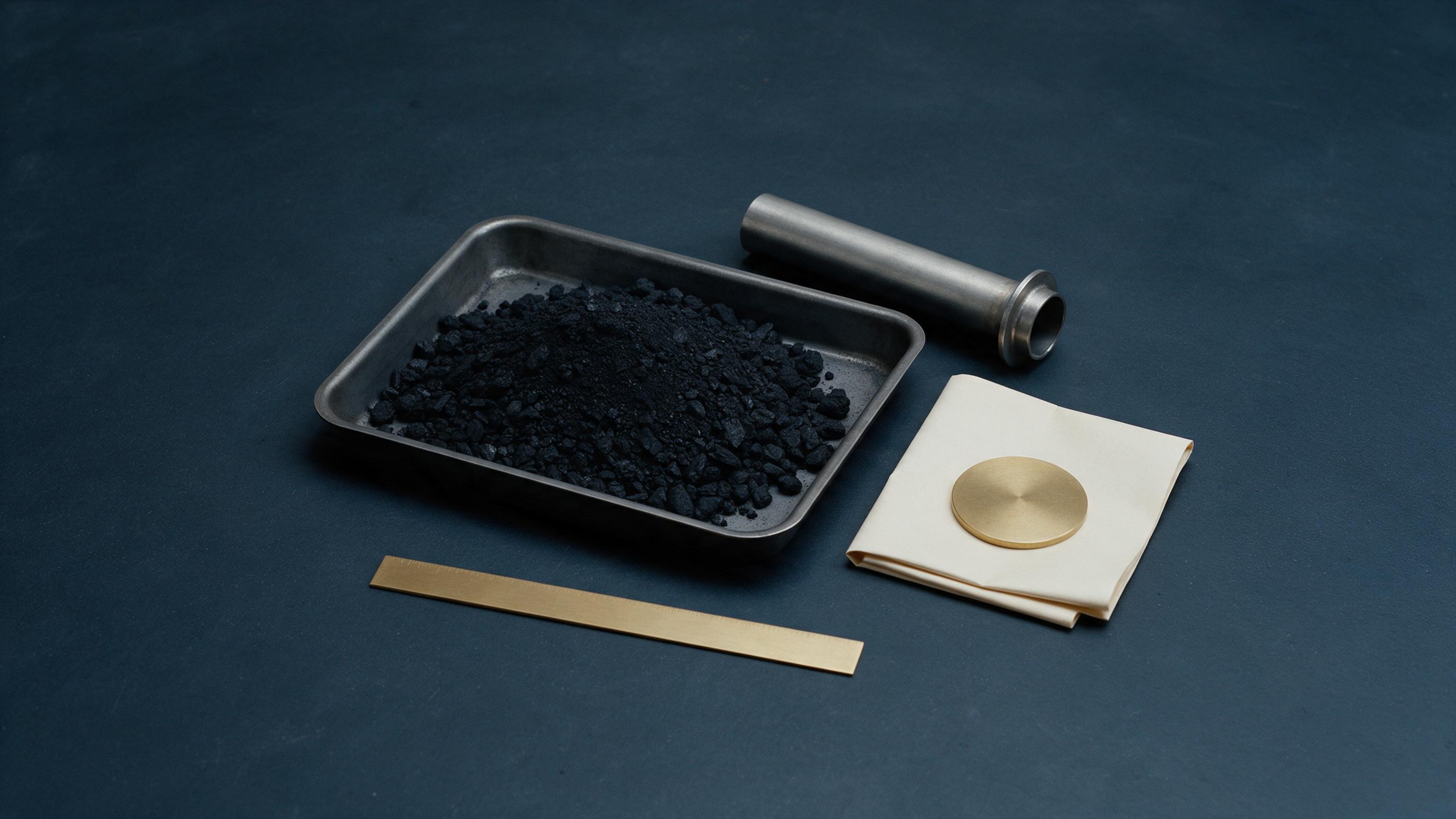
The Plant That Sells The Char
Hydrothermal carbonisation was a USD 965.77 million market in 2024 on a published growth rate of 10.5 per cent, and the installed base behind that number is 122 plants. Three companies hold more than 57 per cent of the capacity. The product that carries the revenue is a solid fuel grade char at EUR 80 to 150 a tonne, against a break-even that needs 10,000 tonnes of annual input. The economics are published. So is the reason most of the announced plants were never built.
Nine Hundred And Sixty Six Million Dollars, And 122 Plants
Hydrothermal carbonisation was a market worth USD 965.77 million in 2024, on a published compound growth rate of 10.5 per cent, with USD 1,067.18 million projected for 2025 and USD 2,513.22 million by 2034. The installed base behind those figures is small enough to count by hand. Europe held 58 active plants in 2023, about 45 per cent of global installations. Asia-Pacific held 41. North America held 23. Together those 122 plants put 3.4 million metric tons of wet waste through a reactor in one year. Both numbers are real, and they describe different things. One is a forecast. The other is a list.
Three Companies Hold More Than Half Of It
Ingelia, HTCycle and C-Green account for more than 57 per cent of installed capacity between them. That concentration is the most useful fact in the commercial record, because it says the technology is not diffuse. It is three operators, three process designs and three patent families. Ingelia is the Valencia company, founded in 2007, commercial since 2010, with eight or more operational plants and patent ES2768236T3. HTCycle is the Karlsruhe company, founded in 2008 as AVA-CO2, which commissioned the first industrial plant of its kind in 2010 and now patents phosphorus recovery from process water and activated carbon from the solid product. C-Green is the Stockholm company, founded in 2013, running a wet oxidation step ahead of the reactor and holding US11724952.
What The First Mover Actually Proved
Ingelia reached technology readiness level 9 in 2010 and then kept going, which is a rarer sentence than it looks. Eight plants across fifteen years is not growth. It is survival, and it is the number every other operator in the sector is measured against. The differentiator the company publishes is a continuous reactor rather than a batch one, with inerts such as sand, glass and metals separated inside the process instead of being screened out beforehand. CPL Industries commissioned a plant in the United Kingdom in 2018 and had a third under construction in Belgium by 2021. HTCycle has been running since 2008. Nobody on this list is young. Nobody on this list is large. Both facts carry weight.
The Only Product That Pays For Itself
The published economics are narrow, and that is the point. Capital cost runs EUR 300 to 600 per tonne of annual input. Operating cost runs EUR 50 to 120 per tonne. Feedstock swings from negative EUR 30 to positive EUR 50 a tonne, which is the gate fee question in one line: a waste handler pays the plant, a biomass seller charges it. The product that carries the revenue is solid fuel grade char at EUR 80 to 150 a tonne. Break-even sits at 10,000 to 20,000 tonnes of annual input. Payback on a large plant runs four to eight years, at an internal rate of return of 8 to 15 per cent once gate fees are included. An operator below 10,000 tonnes is not running a smaller version of this business.
A market of USD 965.77 million, carried by 122 plants.
Two Companies Already Selling Something Other Than Fuel
The companies worth watching have stopped selling fuel. C-Green added a wet oxidation step that removes phytotoxicity limits and lowers the energy demand, recirculates its process water instead of discharging it, and raised EUR 3.7 million in 2025. Suncoal, founded in 2010 and acquired by UPM in 2023, went further and left the fuel market entirely. Its CarboREN technology, covered by patents US12545789 and US12584021, turns lignin into rubber materials, and the portfolio holds more than 47 active patents. A forest products group did not buy that business to sell char. It bought the chemistry.
The Largest Plant On The Record Sells A Gas
The largest installation on the record is in Mexico City, built by TerraNova Energy, and it does not sell a solid either. TerraNova couples carbonisation with thermal hydrolysis, co-owns patents US10343917 and US10287505 with SUEZ, and publishes a claim of 50 per cent more biomethane out of anaerobic digestion as a result. That is a different commercial position. A solid has a market clearing price and a buyer comparing batches. A gas that displaces grid methane is priced by energy markets and carbon charges instead. TerraNova also holds the one asset no competitor has matched, which is scale of a single site.
The Standard That Does Not Exist
Nothing above is held back by chemistry. Two things hold it back. The first is a harmonised quality standard for hydrochar, which does not exist across the European Union, so a buyer of solid product is comparing batches against nothing. The second is capital, and the feedstock logistics that sit behind it: 35 per cent of small facilities struggle to clear a five-year return on their investment. Emissions trading pushes the comparison the other way, because a plant that diverts wet waste from landfill competes with a disposal cost that keeps rising. The probability that this sector is one standard away from a market is not zero. The probability that it is one funding round away, permanently, is not zero either. Most operators are pricing the first one.
Three owners hold more than 57 per cent of the installed capacity.
The map is dead. Nobody told you.
Bali State of Mind is the survival guide for the collapse of everything you were taught to believe.
Beyond this book
Building the same thing somewhere else.
Julien Uhlig is available for advisory work, board seats and media appearances. Write to media@exventure.co.
The academy that trains the operators, across every company in the group, is EX Epic Academy - 25,000 applications, 12 per cohort, 200+ alumni across 19 countries. academy.epicsolutiongroup.com
18-20 November. Online, Las Palmas, Bali.
Three days on what happens to work, capital and institutions when the map stops matching the ground. Seats are limited by cohort.
ex-aisummit.com →