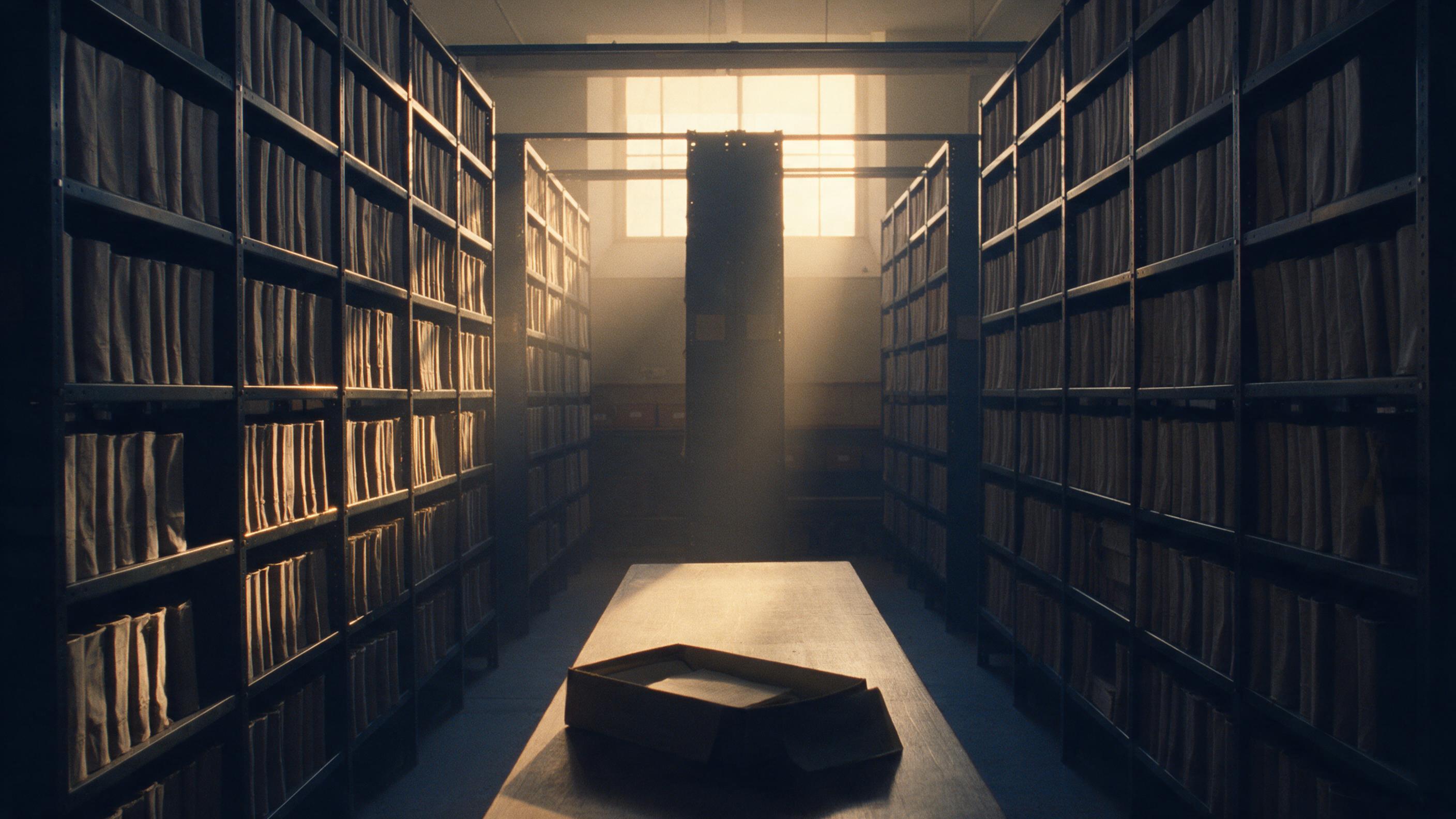
The Paper That Kills The Patent
A conference paper posted eighteen months before a filing date is prior art under Art. 54 EPC, and the European route offers no grace period at all. One missed publication can take out twenty-eight claims at once, after EUR 15,000 to 50,000 of prosecution. The search that prevents it takes two to three hours per concept, and it has to cover six shelves rather than one.
The Paper Written Eighteen Months Before You Filed
A conference paper goes up on a proceedings website, gets indexed, and then sits there. Eighteen months later an examiner finds it, and the claim it discloses is the claim you spent two years drafting. Art. 54 EPC and 35 USC 102 read the same way: a publication dated before the priority date is prior art. The European route has no grace period. Absolute novelty, nothing cures it. The American route allows twelve months, and only for the inventor's own disclosure. Then the invoice: filing and prosecution run EUR 15,000 to 50,000, and one missed publication can take out twenty-eight claims in a single action. The probability that a poster from a conference nobody attended is the thing that kills the family is not zero. Most people price it at zero.
Search Like An Examiner
An EPO examiner works four shelves. Patent databases: Espacenet, PatSnap, Derwent. Non-patent literature: INSPEC, COMPENDEX, the XPO full-text collection. The open internet: Google Scholar and the preprint servers. And the classified files the office keeps, the X-Files. A search that runs one shelf and stops is not a search. Per database the method is short: three keyword combinations, broad, specific, synonym-expanded. Sort by date, scan five years, export every relevant hit to an evidence log. Then chase the citations in both directions, and put the field's three most-cited names through Google Scholar and ORCID. Whoever cites the paper is standing on the ground you intend to claim. Five distinct databases is the floor, not the ambition.
The Preprint Has No Grace Period
Six servers carry the material examiners are least likely to have seen. arXiv for physics, computer science and engineering. bioRxiv and medRxiv for biology and medicine, ChemRxiv for chemistry and materials. SSRN. Research Square. TechRxiv. A preprint posted six months before the filing date is prior art whether or not it was ever peer-reviewed. The EPO and the USPTO both treat it as published, and no grace period protects it. The same trap sits inside the patent record. Where a cited reference has a matching journal article or conference paper from the same inventor, the article can disclose more than the patent did. Check the inventor's name, not only the number.
The Layer Examiners Miss
Sixty minutes in grey literature is worth more than thirty on a database everybody already runs. A conference paper is published prior art the moment the proceedings go online, and plenty of proceedings never reach a standard index. The Conference Proceedings Citation Index tracks more than 190,000 conferences. Springer LNCS and the ACM Digital Library hold the computer science and engineering venues. EasyChair and ConfTool keep pre-conference archives. Zenodo is where a lot of proceedings quietly land. Take the three to five conferences that matter in the field, search five years of past programmes, and pull anything past fifty per cent topical overlap. A PhD student who spent three years on gasification at TU Freiberg may have disclosed what the professor's patents did not.
The European route has no grace period. Absolute novelty. Nothing cures it.
The Deposit Date And The Poster On A Feed
Two dates decide a thesis and a conference paper, and neither is the one people remember. A thesis is prior art from its deposit date. Not the defence date, not the graduation date. The deposit date. Conference proceedings are prior art from the day the proceedings publish, which is a different day from the conference itself. Check both. ProQuest, OATD, DART-Europe and the British Library's ETHOS hold the theses. Posters are the sharper edge: FigShare, Zenodo, SlideShare, a recorded talk on YouTube, a photograph of a poster on a conference feed. Public is public. EU project deliverables count as well. A published H2020 document titled D3.2, catalyst screening results for hot gas cleaning, can block a claim outright.
The Written Record Is The Deliverable
The report is the deliverable, not the search. Date, searcher, the three keyword combinations used, the databases hit, a hit count. Every hit that needs review gets a title, authors, year, a DOI or URL, one sentence on relevance to the claims, and a risk level: high, medium, low. Databases that returned nothing are written down as confirmed zero hits after two independent query sets. Then the verdict. Clear. Caution, with the count of medium-risk hits and a recommendation to narrow the claims. Or blocked, with the URL. Sixteen years of field work through rural Nigeria, post-conflict Serbia, Kazan, Fukushima and Silicon Valley, and this is still the part I do by hand. Two to three hours per concept. One high-risk publication means a patent attorney, not the filing system.
One missed publication can take out twenty-eight claims at once.
The map is dead. Nobody told you.
Bali State of Mind is the survival guide for the collapse of everything you were taught to believe.
Beyond this book
Building the same thing somewhere else.
Julien Uhlig is available for advisory work, board seats and media appearances. Write to media@exventure.co.
The academy that trains the operators, across every company in the group, is EX Epic Academy - 25,000 applications, 12 per cohort, 200+ alumni across 19 countries. academy.epicsolutiongroup.com
18-20 November. Online, Las Palmas, Bali.
Three days on what happens to work, capital and institutions when the map stops matching the ground. Seats are limited by cohort.
ex-aisummit.com →