The Meter Is The Business
Compute is rented by the hour now, and the hour has a published price. On a dated price list, the arithmetic decides which businesses survive.
A Meter, Not A Machine
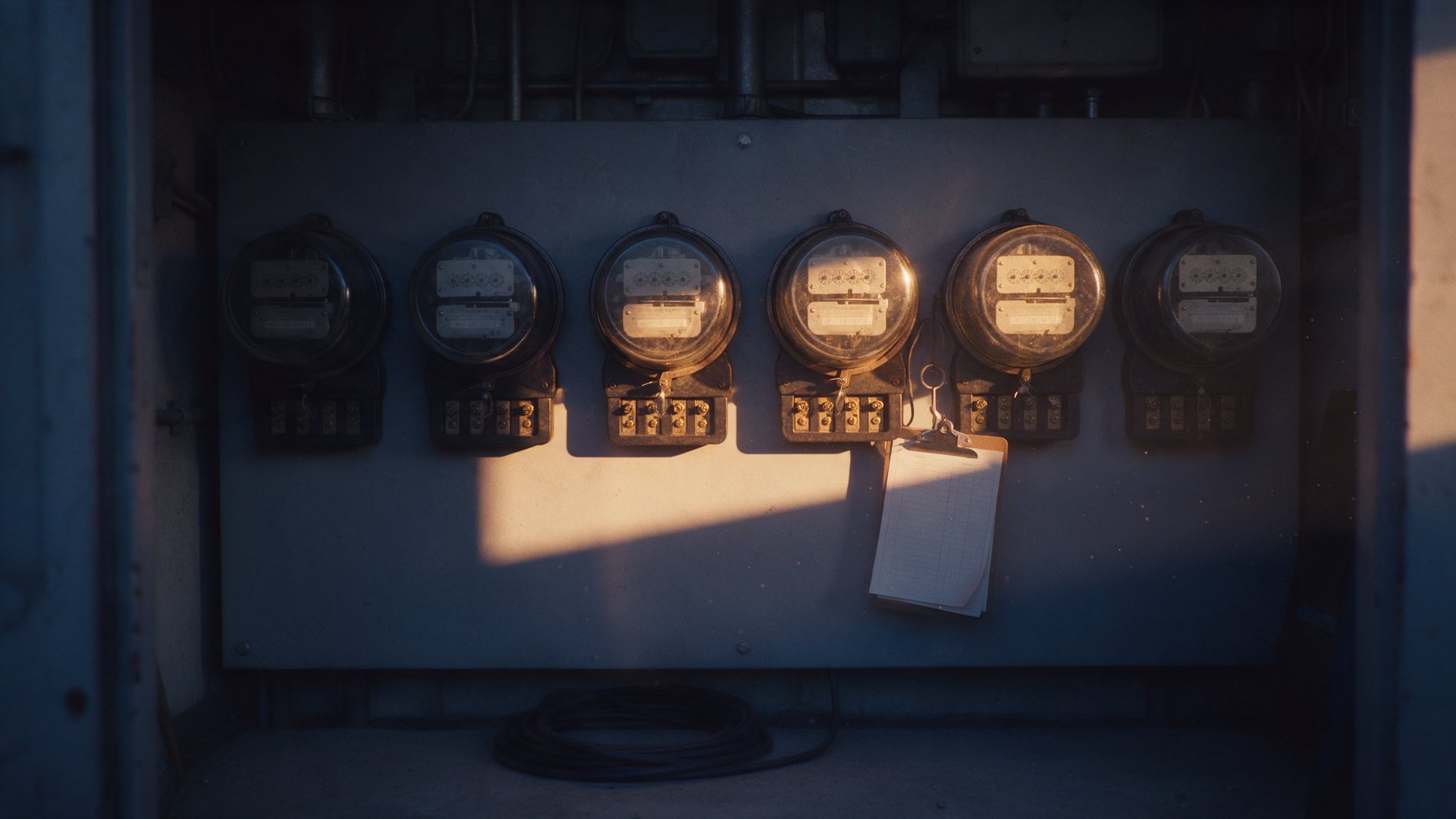
Nobody buys a GPU anymore. They rent one by the hour, and the hour has a published price. On 8 May 2026 a price check across the Singapore rental market came back with one number on the shelf: an RTX 4000Ada with 20GB of memory at USD 0.04 to 0.08 per hour. No A100. No H100. No L40S. The global reference sat next to it. An A100 PCIe 80GB at USD 0.13 per hour in Italy. An H100 SXM 80GB at USD 1.47 per hour in France. The same card family, eleven times apart, decided by which country the rack sits in. A machine is a capital asset. A meter is a business decision, and that decision is taken every hour whether or not anyone is watching it. That is the new shape of the industry. Compute stopped being a thing you own and became a rate you pay, and rates are comparable in a way that ownership never was.
The List, Dated
Every figure here is a snapshot dated 8 May 2026, taken from live API queries and published market data on that day. It is a dated fact, not live momentum. Meters move. The large clouds were not selling Singapore. RunPod's regions were the United States, the European Union and Canada, with A100 secure-cloud capacity estimated at USD 1.89 to 2.29 per hour and H100 at USD 2.99 to 3.69. Lambda listed an A100 80GB at USD 1.10 per hour and an H100 80GB at USD 2.49, in the United States only. CoreWeave ran in the United States and Europe and nowhere else. Vast.ai had Singapore inventory, and the inventory was a 20GB card. That is the first thing a meter reveals. Supply is not distributed evenly, and the price on the screen is a price for somewhere else.
The Requirement Sets The Meter
The model decides the hardware. The hardware decides the bill. A 250 to 300GB working set at 8-bit precision takes four accelerators of 80GB. The same model at 4-bit, roughly 150GB, takes two. That is a ratio of about 1.83, and it is set by an engineering preference chosen early and rarely revisited. Quantization gets discussed as accuracy against speed. On an invoice it is also the difference between a 4x A100 rack and a 2x A100 rack, and between the meters attached to each of them. I have restructured a EUR 75 million industrial group. The pattern there was always identical. The cost is set in the design phase and paid in the operations phase, years later. Software has been the last industry to internalise that, because its unit costs used to round to zero. They no longer round to zero.
Where The Meter Actually Is
Four providers with a Singapore presence were quoting on that May date, all with private networking included. A bare-metal operator at a Digital Realty site in Singapore listed 2x A100 80GB at USD 4,200 to 5,500 a month and 4x A100 at USD 7,800 to 9,500, with 64 or more cores, 512GB to 1TB of RAM and 10Gbps, on a one-month minimum. A hyperscale APAC bare-metal line listed 4x A100 at USD 6,500 to 8,000 a month with private VLAN networking. Tencent Cloud's Singapore region quoted 4x A100 shared at about USD 4,800 and 4x A100 on a dedicated host at USD 6,500 to 8,500. Alibaba Cloud listed 2x A100 at about USD 2,700, 4x A100 shared at about USD 5,400, and 4x H100 at USD 10,500 to 12,500. A jurisdiction you can reach in five milliseconds costs more than one you cannot. On the cheapest listed four-card shape, the Singapore premium over a US-only meter was more than three times. That premium is attached to the contract, not to the silicon.
A machine is a capital asset. A meter is a business decision.
Convert The Rack Into An Hour
Monthly and hourly prices are different units, and converting between them is the entire job. Four A100s at USD 7,800 to 9,500 a month, billed over 730 hours, is USD 10.68 to 13.01 per hour for the rack. Per card, that is USD 2.67 to 3.25. The hyperscale APAC range converts to USD 8.90 to 10.96. Alibaba's dedicated host converts to USD 9.59 to 12.33. Tencent's shared four-card plan converts to USD 6.58. On the same four-card shape, the hourly clouds came to USD 7.56 to 9.16 at RunPod's A100 estimate and USD 4.40 at Lambda's listed US rate. Now the part that never appears on a rate card. A monthly bare-metal bill is paid in full whether the GPUs are running or sitting idle. An hourly meter is not. On the fixed contract, 1,032 hours of continuous use is what the cheapest monthly figure buys at the cheapest hourly rate, which is longer than the month. There is no break-even inside the billing period. There is only the utilisation you actually get.
What The Hour Does Not Include
Setup fees of USD 500 to 1,000. Bandwidth metered at USD 0.08 to 0.12 per gigabyte, with a 1Gbps commit around USD 2,500 a month on one list and included allocations of 10 to 30TB on others. Annual commitments discounted 10 to 20 per cent on one price sheet, about 30 per cent on another, 30 to 40 per cent on a third. Lead times of two to eight weeks while GPU supply stayed constrained. The lead time is the cost that drops out of every model. A meter starts when the machine exists, and the machine does not exist for two to eight weeks after the invoice is agreed. None of that appears in a per-hour rate. I once signed a EUR 20 million personal guarantee on an operation whose unit economics I could recite from memory and whose cash timing I had not modelled at all. It folded on Christmas Day 2008. The lesson was not about the market. It was that the calendar is a cost line.
The Arithmetic, Or Nothing
Put the chain together. The VRAM requirement sets the card count. The card count sets the meter. The region sets the multiplier. The contract sets the utilisation risk. The lead time sets the start date. Five inputs, all of them numbers, and no narrative step anywhere between them. The probability that a business survives a cost it never modelled is not high, and most operators are pricing it at zero. A published hourly rate is not a fact about a vendor. It is a fact about the business model that rate makes possible. I have built companies across twelve countries and taken one through a Frankfurt IPO, and deployed 210 energy systems across Africa and Asia. In every one of those the number that decided the outcome was not on the top line. It was on a line nobody owned. Compute is not infrastructure anymore. It is a meter, and the meter decides which businesses survive.
The price on the screen is a price for somewhere else.
The map is dead. Nobody told you.
Bali State of Mind is the survival guide for the collapse of everything you were taught to believe.
Beyond this book
Building the same thing somewhere else.
Julien Uhlig is available for advisory work, board seats and media appearances. Write to media@exventure.co.
The academy that trains the operators, across every company in the group, is EX Epic Academy - 25,000 applications, 25 seats per cohort, 210 alumni across 19 countries. academy.epicsolutiongroup.com
18-20 November. Online, Las Palmas, Bali.
Three days on what happens to work, capital and institutions when the map stops matching the ground. Seats are limited by cohort.
ex-aisummit.com →