The Look Is Decided Last
2 shots lit the same, framed the same, performed the same will tell opposite stories once a grade lands on them. The camera records data. The grade decides what the scene was about. That is why the look is never baked in at capture, and why the monitor in front of you is the least trustworthy instrument in the room.
The Camera Records Data, The Grade Decides What It Meant
2 shots lit identically, framed identically, performed identically can tell opposite stories. Warm the image by 300 kelvin, push the highlights toward amber, and the same room becomes the memory of a safe place. Cool the shadows, drop the lift, and it becomes the last room before something goes wrong. No light changed between those 2 versions. Only the grade did. The camera does not know which one you meant. It records data, and the grade decides what the data was about. That is the whole first principle, and it is why you capture flat and grade in post rather than committing to a look on set. Flat means a log profile, low contrast, neutral colour, every stop still available to shape later. Bake a look into the footage at capture and you have bought exactly 1 ending for a scene that could have had 5, with 12 stops of range still sitting in the file. The 2026 default is a 10 bit log capture from a body that costs 1500 dollars, and it will out-grade a 2010 cinema camera with the look burned into it. What the grade actually decides is emotion, not correctness. Warmth reads as safety, intimacy and memory. Coolness reads as distance, isolation and night. Neither is right. 1 of them is true for the scene you are shooting, and the grade is where you say which.
The Monitor Lies And The Scopes Do Not
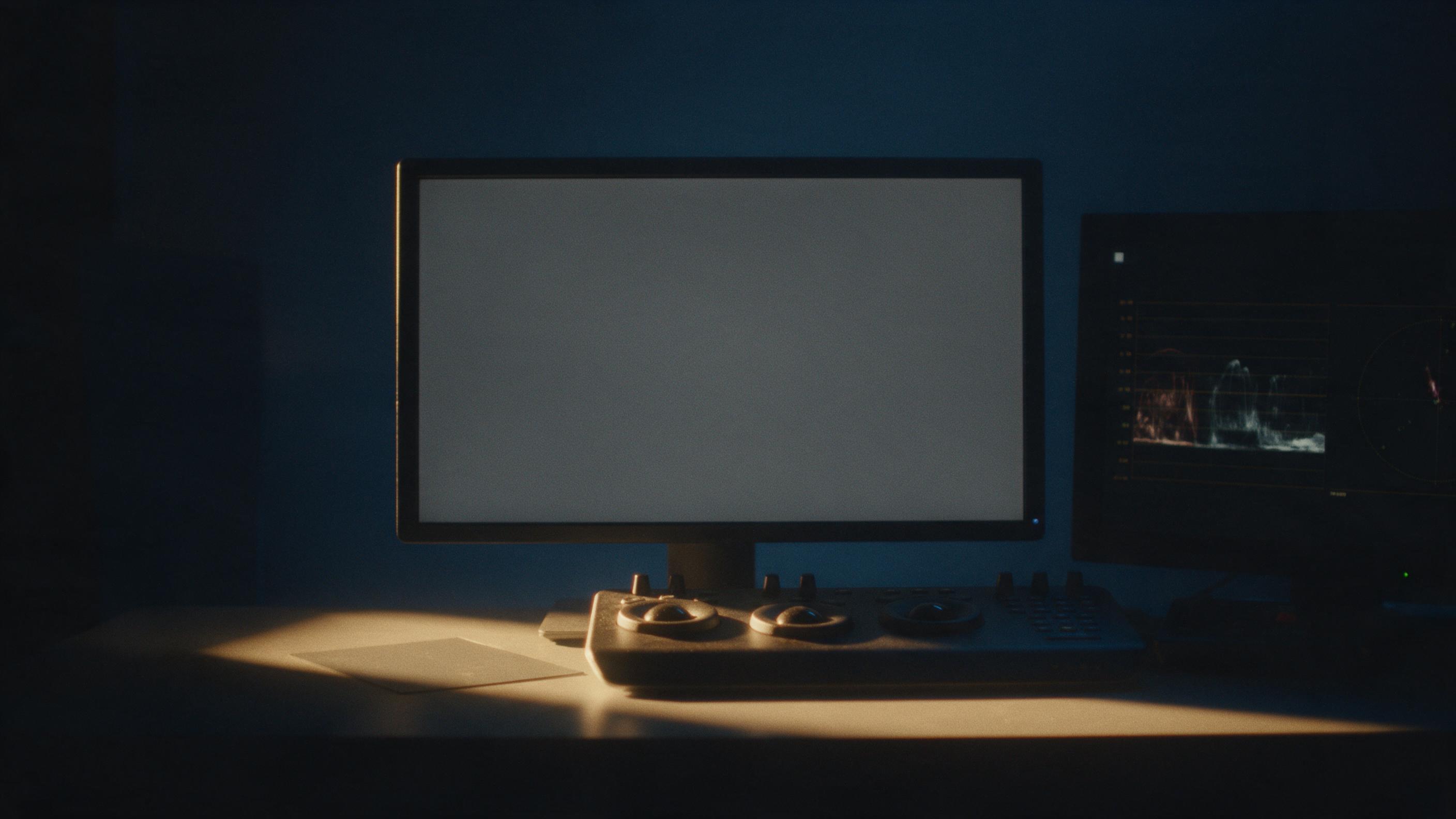
There are 5 instruments in front of you and 4 of them are honest. The monitor is the one that lies, because ambient light hits the panel, the panel drifts, and your eye adapts to whatever it has been looking at for the last 20 minutes. A grade that looks rich on a bright screen at 14:00 can read as mud at midnight, and the audience is watching at midnight. The scopes are the ground truth. The waveform reads brightness from 0 at the bottom to 100 at the top, and it is where exposure and clipping are settled. The histogram shows how the pixels are distributed, which is where overall balance is settled. The vectorscope plots colour as an angle and a distance from centre, which is where skin tone and any cast are settled. The RGB parade splits the 3 channels side by side, which is where white balance is settled before a single creative choice is made. Decide on the scopes, confirm on the screen. Run that in the other order and you are grading by mood, which is exactly how a scene ends up beautiful on your machine and wrong on every phone in the world. The first move is always the unglamorous one. Neutral greys should be neutral, and an 18 percent grey card is the only way to know where neutral actually sits. Colour temperature runs from 3200 K tungsten to 5600 K daylight, and the parade tells you in 1 glance which one you shot under. Fix the cast on the parade before you touch the look, because a look layered on top of a cast is 2 problems wearing 1 coat.
3 Controls Carry The Whole Pass
Lift, gamma and gain. Everything else in the panel is a refinement of those 3, and each one owns a third of the image. Lift controls the shadows, which is the floor of the picture, and that is where mood is decided. Gamma controls the middle, which is most of the frame and all of the skin, and it sets the feeling of exposure. Gain controls the highlights, the ceiling, and that is where air and daylight live. Offset, the 4th control, moves everything at once and is a global shift rather than a decision. Contrast is the simplest arithmetic in the room. Lift down, gain up. Push the shadows 1 stop toward black and the highlights 2 stops toward white and the image gains punch immediately. A modern sensor hands you 12 stops to spend, which sounds like plenty until 10 of them are sitting in the top half stop of the highlights. The 2 ways to ruin it are always the same 2: crushing the blacks until there is no detail left in them, and clipping the whites until they are blown and unrecoverable. Lift down, gamma neutral, gain up is the S-curve, and it is the classic cinematic contrast shape for 1 reason. It buys the punch at both ends without paying for it in the middle, so the blacks stay deep, the whites stay bright, and the skin in between never moves. The modern default grade is built from the same 3 controls: teal pushed into the lift and orange pushed into the gain. Shadows cool, highlights warm, skin left where it was. 2 moves, and it is the reason so much of the last 12 years of film looks like it was shot by the same person.
Skin Is Sacred And It Sits On Its Own Line
Look at the vectorscope and you will see a line running out from the centre between yellow and red. That is the skin-tone line, and human skin from Lagos to Oslo lands along it. Drift a face toward green and the subject looks ill. Drift it toward magenta and they look worse. The audience cannot name what is wrong, and they will not trust the shot. That is why the look gets built around the skin rather than through it. You are not grading a face. You are grading a scene with a face in it, and the face is the part of the frame that the audience is wired to read first. The tool for it is a secondary correction: isolate a range and move it without touching anything else. Isolate the skin and leave it real while you cool the room behind her. Isolate the sky and pull it down 2 stops while the ground stays where it is. Isolate 1 dress and give it the signature colour of the film. This is the most useful single move in post, and it is invisible when it works. Keep the order and the rest follows. A technical LUT first, so flat log footage lands in Rec.709, or Rec.2020 for HDR delivery, where it can actually be judged. Then balance. Then the primary pass on lift, gamma and gain. Then the secondary isolation. Then a creative LUT or film emulation, the Kodak 2383 print look or the halation and grain of a celluloid response curve. Then grain, last, always last, because grain applied before a grade gets stretched by the grade.
The camera records data. The grade decides what any of it meant.
1 Palette Per Scene, Broken Once On Purpose
Colour carries meaning whether you assign it or not. Warm amber reads as safety, intimacy, memory. Cool teal reads as distance, isolation, clinical light, night. Desaturated and muted reads as grit, realism and loss, which is why so much documentary work looks like weather. A single signature colour ties wardrobe, set and light into 1 statement. Monochrome separates a timeline, or tells the audience they are inside a memory. The discipline is 1 palette per scene, held all the way through, and matched across every shot in it. Match the shots and the cut disappears. Leave 1 shot a half stop warm and the audience feels the edit as a flinch they cannot explain. Then break the palette deliberately, and only once. A scene that has been cold for 4 minutes and goes warm for 15 seconds has said something with no dialogue at all. The break is the loudest thing in the grade, so it lands exactly 1 time. Christopher Nolan has run the same idea for 2 decades: pick the signature colour, hold it, and spend the exception like it costs money, because it does. 2 failure modes end most grades. The first is a palette that changes every shot, which reads as indecision across a 120 minute film. The second is a palette so flatly consistent that nothing in the story ever gets louder, and the audience stops hearing the picture at all.
Direct The Grade In The Prompt Or Get The Default
You cannot grade inside a text-to-video prompt the way you can in a grading suite, but you can direct the grade by naming the palette and the contrast shape. The fragments that work are plain. Flat, low contrast, log profile, neutral colour, ready to grade. Warm amber grade with golden-hour tones. Cool teal-and-orange with teal shadows and warm skin. Muted, desaturated, documentary realism. Deep blacks, lifted highlights, filmic S-curve. Soft film grain with subtle halation. Monochrome, black and white. 1 signature colour, amber throughout. The pitfall is the word cinematic. Ask a model for cinematic colour and it returns saturated, glossy, too perfect, because that is what the word means in its training set. Name the palette and name the contrast, or the default arrives and every shot in your film looks like a stock advert. The sequence is the same every time. Was it captured flat, or is there nothing to grade. Are white balance and exposure neutral on the scopes. What is the mood, so where does the lift sit. What is the palette, so which way do lift and gain lean. Is the skin protected on its own line. Is the film texture applied, grain last. Does every shot in the scene still match. 7 questions, asked in that order, and the look stops being taste and starts being a decision. The probability that a grade applied in the wrong order reads as intention is close to zero, and most people are pricing it at zero while they drag the same 3 sliders for 20 minutes in a dark room. Every decision is then read at 24 frames per second, so a wrong look is not noticed by an audience, it is sat through for the next 90 minutes. 16 years of field work across rural Nigeria, post-conflict Serbia, Kazan and Fukushima kept returning the same lesson outside a grading suite: fix the neutral first, protect the thing that carries the meaning, and decide the look last. The book that came out of 12 countries of building runs 393 pages, published 8 April 2026, and the grading chapter sits near the end for exactly the reason this piece does. Balance first. Mood in the lift. Warmth in the gain. Skin always protected. Grain last.
The monitor lies. The scopes do not.
The map is dead. Nobody told you.
Bali State of Mind is the survival guide for the collapse of everything you were taught to believe.
Beyond this book
Building the same thing somewhere else.
Julien Uhlig is available for advisory work, board seats and media appearances. Write to media@exventure.co.
The academy that trains the operators, across every company in the group, is EX Epic Academy - 25,000 applications, 25 seats per cohort, 210 alumni across 19 countries. academy.epicsolutiongroup.com
18-20 November. Online, Las Palmas, Bali.
Three days on what happens to work, capital and institutions when the map stops matching the ground. Seats are limited by cohort.
ex-aisummit.com →