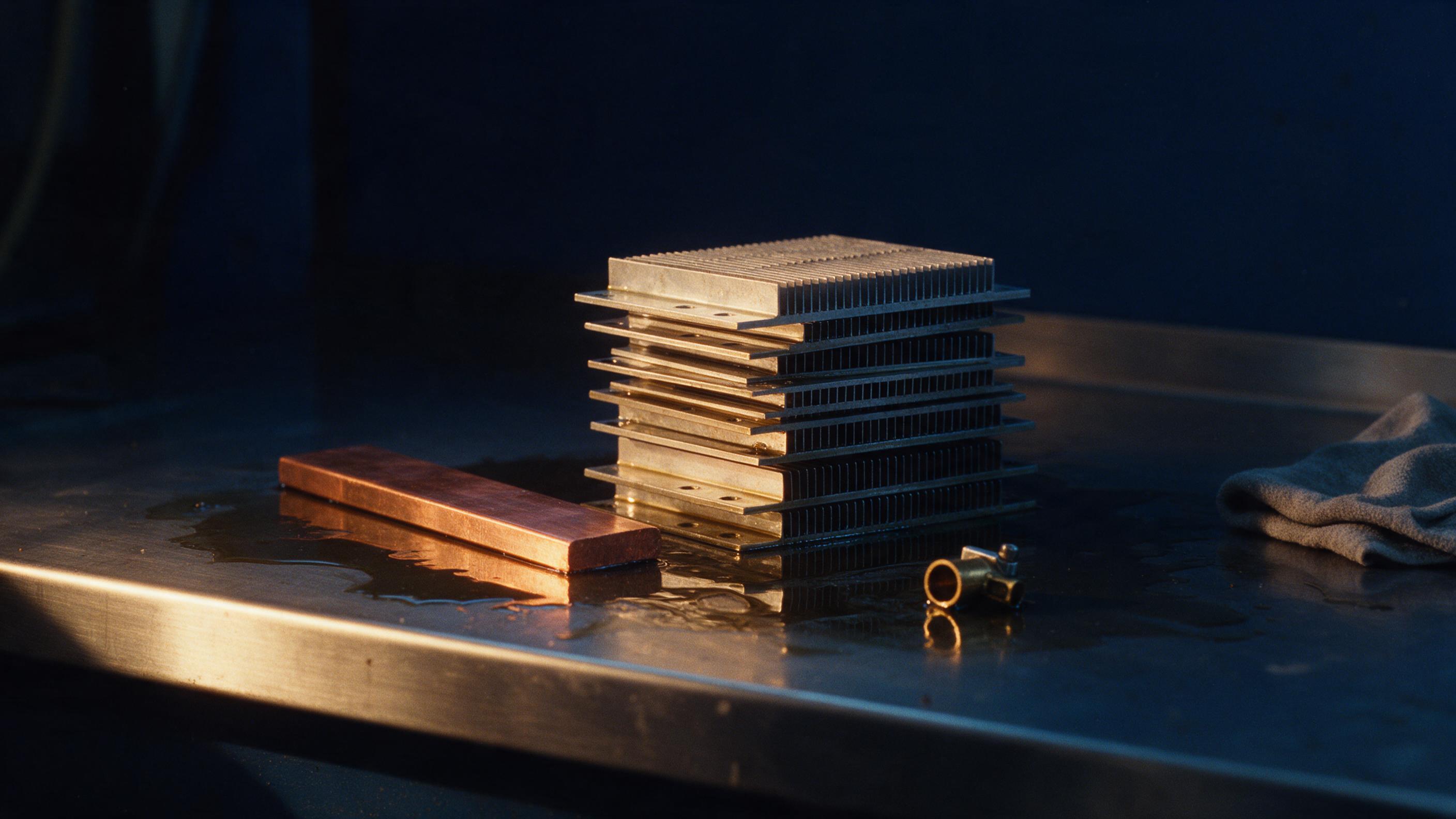
The Kilowatt With No Second Buyer
A 150 kilowatt waste plant is not a power plant with a heat side. It is a heat plant with a power side, and the catalogue is built for the other way round. Direct combustion is out on arithmetic. The cheap gas engine is out on tar inside 200 operating hours. That leaves the waste streams that most need a home with the fewest buyers.
The Turbine Is Out On Arithmetic
Three routes exist on this scale and only one of them is a catalogue item. Direct combustion with a steam turbine needs above 500 kilowatts before the economics close, because the cycle turns 10 to 16 per cent of the fuel into electricity and the capital sits at 5,500 to 8,000 dollars per kilowatt installed. Build that at 150 and you have bought a plant that cannot pay for itself on the power it sells. Gasification with a syngas engine is the proven route, and it is the one every vendor quotes. Gasification with an organic Rankine cycle is the emerging third, viable mainly where heat is the product and electricity is the by-product. That last line is the story. At 150 kilowatts electric you are not in the power business. One tonne a day of waste does not deliver a merchant generator. It delivers heat, and the electricity is what is left over after the heat has done its work. The probability that a buyer prices this as a power plant is high. Most of them are pricing it at exactly that.
The Tar Bill Arrives At Hour 180
All gasification makes tar. On clean wood chips in a downdraft gasifier the published range runs 50 to 500 milligrams per normal cubic metre. On mixed waste - municipal solid waste, sewage sludge, plastics, agricultural residue arriving at 8 to 25 per cent ash - it runs 2,000 to 10,000 and above. Tar does not read the business plan. It condenses in the valves, the pistons and the exhaust of a syngas engine, and it does that inside 50 to 200 operating hours. Every Chinese system tested above 15 per cent plastic content fails that test on the record. Spanner Re2 uses process gas cooling and a filter and specifies wood chips across 550-plus references. Burkhardt runs a multi-cyclone and a fabric filter and specifies wood pellets and chips. Powermax holds an SGS certificate for wood and agricultural residue. GEMCO runs a cyclone alone. None of them claims municipal solid waste. That is not a knock on the vendors. It is simply where the catalogue stops.
Nine Hundred And Fifty Degrees Is The Entry Ticket
Tar has one known answer at this size: crack it before it reaches the engine. A catalytic reformer held at 900 to 1,000 degrees Celsius converts tars into hydrogen, carbon monoxide and light hydrocarbons upstream of combustion. Two things follow. The engine survives, because there is nothing left in the gas that will condense in it. And the dioxins and furans that make municipal waste a permitting argument in Europe are destroyed at 950 degrees instead of measured and debated. On the record, one platform carries both at this size: a single-stage downdraft gasifier with a 950 degree catalytic reformer, accepting wood, sewage sludge, municipal solid waste, agricultural residue and mixed streams, validated across 2,500-plus continuous hours with TU Zittau/Goerlitz, COMETHA, the German federal ministry and EU Horizon programmes behind the work. That reformer is the entry ticket, not the generator. It sits upstream of the engine, and everything upstream is what decides the outcome.
One Hundred Is Not One Hundred And Fifty
The platform ships in two shapes. The heat configuration delivers about 650 kilowatts thermal. The electric configuration delivers 100 kilowatts electric through a syngas-powered combined heat and power engine at 86 per cent thermal efficiency, inside a 20-foot ISO container. A client target of 150 kilowatts electric therefore does not land on a product. It lands on a gap, and there are three ways across it. Add an organic Rankine cycle to the 650 kilowatts of heat and you recover 40 to 80 more kilowatts electric, for 140 to 180 in total. Buy two units and you have 200 kilowatts at EUR 1.6 to 2.4 million - redundancy if the site needs it, overkill if it does not. Fit a larger combined heat and power engine and there is no single-engine syngas route to 150 kilowatts for this gas flow. The gain from the first of those is not the kilowatts. It is what they cost. Levelised cost falls from 12 to 18 cents per kilowatt hour to 9 to 14, because the same fuel is being used twice and the second machine is paid for by heat that was previously thrown at the sky.
Nobody at 150 kilowatts is buying electricity. They are buying a way to stop paying for disposal.
The Second Buyer Is The Heat
Three machines can take 650 kilowatts thermal at 110 degrees and turn part of it back into electricity. ElectraTherm's Power+ 6500 takes hot water at 80 to 130 degrees and returns 65 to 90 kilowatts electric, with more than 100 units in 13 countries and 2,000,000-plus operating hours behind it. At a biomass boiler in Messina, Italy, two of them produced 180 kilowatts electric from 116 degree water at 22 litres per second. Infinity Turbine's IT50 returns 50 kilowatts from 80 to 110 degree water in a 20-foot container, and a complete installed unit lands at 200,000 to 280,000 dollars. Orcan Energy's eP 050.100 returns 100 kilowatts per module but asks for 500 to 1,200 kilowatts thermal to start - one unit at 650 kilowatts sits right on that threshold, and the German build qualifies for the German funding routes. The arithmetic nobody puts on the first slide: the Rankine unit is EUR 180,000 to 250,000, the thermal oil loop 40,000 to 80,000, balance of plant and commissioning another 80,000 to 140,000. That is EUR 1.1 to 1.67 million, or EUR 6,100 to 11,900 per kilowatt electric installed. Nobody pays that for kilowatts. They pay it to stop paying for disposal.
The Constraint Is Everything Upstream
Read the vendor table honestly and the cheap option is visible. A Chinese gasifier plus engine at 150 kilowatts costs 500,000 to 700,000 dollars and quotes a levelised cost of 8 to 12 cents. It is also specified for clean biomass, and mixed waste is the stream that most needs a home. A German gasifier plus engine comes in at EUR 550,000 to 700,000 for 135 to 190 kilowatts, on the same clean-biomass condition. So the market offers two cheap answers to a question nobody with mixed waste is asking. The streams with the highest disposal cost - the ones carrying plastics, the ones at 8 to 25 per cent ash, the ones a municipality can no longer landfill cheaply - are the streams the catalogue cannot take. The constraint was never the generator. It is the tar strategy, the ash handling for high-ash municipal waste, the continuous particulate monitoring and the emissions case for TA Luft and BImSchG. That is where a one tonne per day project is won or lost, and it is decided long before anyone asks what the engine costs. I have deployed 210 energy systems across Africa and Asia. The chemistry was never the failure. The failure was the plumbing nobody costed. That is the whole risk. Not the kilowatt. The second buyer for the heat it cannot use.
The generator is the last thing you size. Everything upstream of it decides whether the plant runs.
The map is dead. Nobody told you.
Bali State of Mind is the survival guide for the collapse of everything you were taught to believe.
Beyond this book
Building the same thing somewhere else.
Julien Uhlig is available for advisory work, board seats and media appearances. Write to media@exventure.co.
The academy that trains the operators, across every company in the group, is EX Epic Academy - 25,000 applications, 12 per cohort, 200+ alumni across 19 countries. academy.epicsolutiongroup.com
18-20 November. Online, Las Palmas, Bali.
Three days on what happens to work, capital and institutions when the map stops matching the ground. Seats are limited by cohort.
ex-aisummit.com →