The Acid That Takes The Carbon With It
Mineral acids at 0.1 to 3 molar recover 70 to 98 per cent of the phosphorus from ash and char in 15 to 60 minutes on a route that has been industrial standard for decades. The same operating window, pH 0.5 to 3.0, is the dealbreaker: below pH 3 the carbon structure collapses and the functional groups the capture product depends on are protonated away.
Ninety-Eight Per Cent, And The Bill Attached
Mineral acids at 0.1 to 3 molar pull 70 to 98 per cent of the phosphorus out of ash and char. Sulphuric, hydrochloric, nitric, phosphoric. Phosphate minerals dissolve into soluble orthophosphate, and the reaction is fast and exothermic on its own. This is not a laboratory route. Ash processors and phosphate rock plants have run it for decades, and its technology maturity sits at level 9 before a single project meeting is held. That number is why it keeps coming back into the room. Recovery above 90 per cent looks like the answer to a supply problem, and a supply problem is usually what is on the table. Then the second line of the same table arrives. Almost no carbon survives the trip. Two products leave one reactor, and only one of them is the point.
Fifteen Minutes At Room Temperature
Kinetics are the part that flatters it. Fifteen to thirty minutes at ambient temperature. Five to ten minutes at 80 degrees Celsius. Acid demand between 0.1 and 3 molar, using 5 to 20 millilitres per gram of char, set by how alkaline the char is. If the char discharges from a dryer at 300 to 500 degrees Celsius, the heat is already paid for. Reaction rates on this chemistry climb roughly 3 to 5 times for every 10 degree rise, so hot char arriving in the tank is free kinetics that a cold feedstock has to buy with a burner. Speed like that hides a decision. A process that finishes in fifteen minutes gives nobody time to notice what else is dissolving in the same vessel.
The pH Decides, Not The Acid
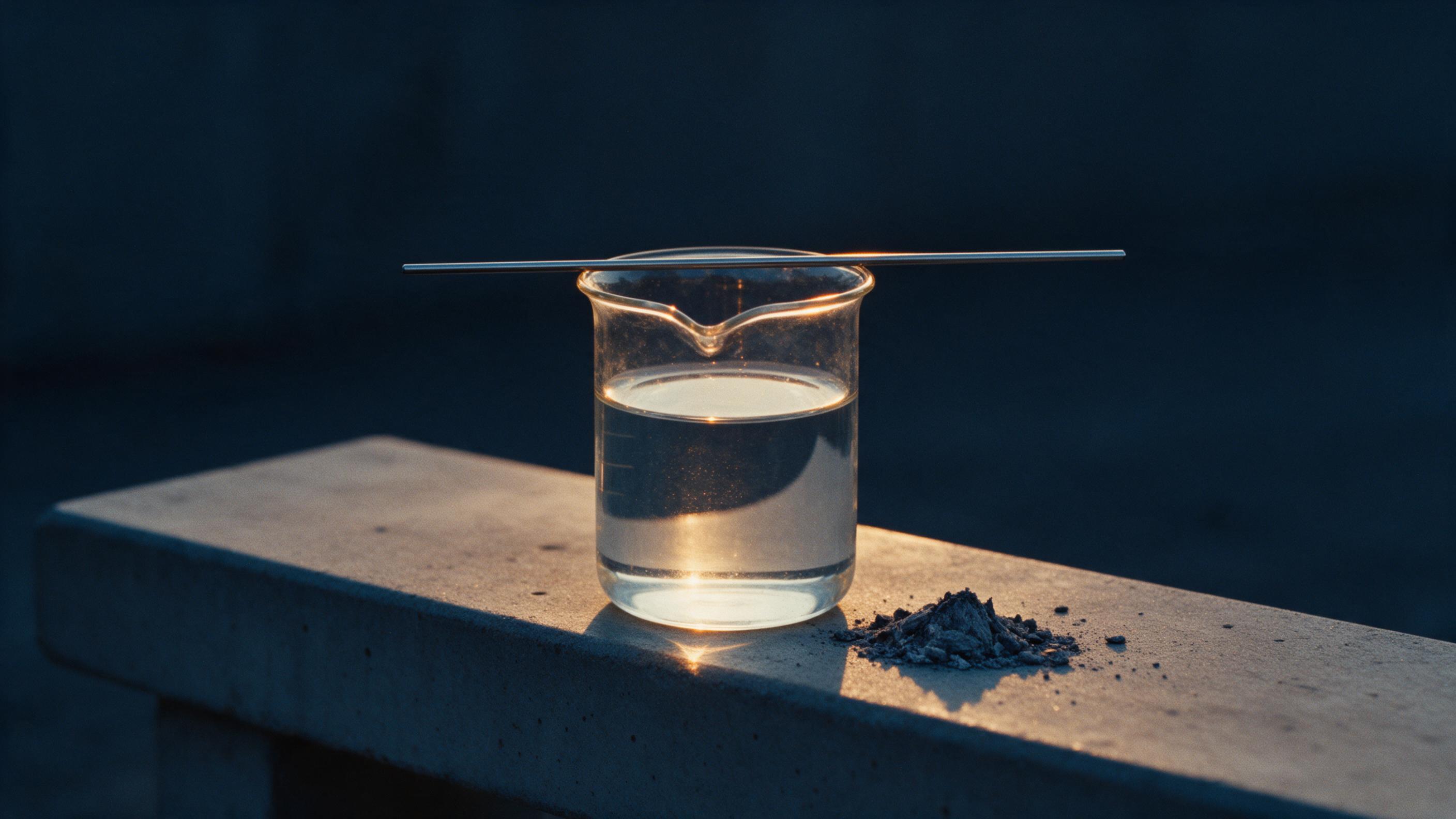
Everything on this route turns on one number. Operating pH runs 0.5 to 3.0. Below pH 3 the acid attacks the carbon structure itself. Surface area collapses, pores degrade, and the carboxyl, hydroxyl and carbonyl groups carrying the capture performance are protonated away. A char that loses more than 80 per cent of its surface area still holds phosphorus beautifully and can do nothing else. The dissolution is not selective either. Iron, aluminium, calcium, magnesium and every heavy metal in the feedstock come out at the same time, into the same liquor, and all of it has to be separated downstream before the phosphorus is worth anything. The acid does not choose between the two products. The pH does. The decision is made in a beaker, ten minutes before anyone opens a spreadsheet.
The Mild Window Nobody Prices
Very mild conditions change the arithmetic. Hold pH above 3, keep contact short, leave the temperature at ambient, and 30 to 50 per cent of the phosphorus comes out with most of the carbon still standing. Published work has lived in that window for years. Kalmykova and Karlsson ran 0.1 molar sulphuric acid for 15 minutes and took 55 per cent of the phosphorus while retaining 70 per cent of the carbon. Semerci and colleagues reached 95 per cent recovery at pH 2 in 2019 and co-dissolved every heavy metal in the sample. So the honest comparison is 55 per cent of one product against 95 per cent of one product and most of the other one gone. There is a version of this trade in every project I have watched. I have built companies across twelve countries and deployed 210 energy systems, and the pattern never moves: the specification gets written around the number that is easiest to measure.
Seventy to ninety-eight per cent of the phosphorus comes out. Most of the carbon does not survive the trip.
What It Takes To Hold The Acid
Acid at this strength sets the bill of materials. The reactor is 316L stainless, Hastelloy or lined carbon steel. Solid and liquid separate in a filter press or a centrifuge built for acid service. Storage tanks, metering pumps and, if the acid is hydrochloric or nitric, a fume scrubber. Diluting sulphuric acid releases heat, so the system needs cooling designed in. If the feedstock carries fluorides, hydrogen fluoride can come off the tank. For a plant handling one tonne of char a day, that package runs roughly EUR 80,000 to 120,000 to build, against EUR 50 to 120 per tonne of char to run, moving with the acid concentration. None of those numbers is unreasonable. It is simply equipment that exists to contain the thing destroying the other product.
The Trade Is A Number Before It Is An Argument
Score the route on what the plant is for and the shape changes. Phosphorus recovery scores 9 out of 10. Carbon preservation scores 1. Weighted, the route lands at 4.80 out of 10, because carbon preservation carries 40 per cent of the decision and recovery carries 20. A first-of-its-kind claim built on mineral acid is also hard to defend. The Turkish filing WO2025144324A1 claims phosphoric and nitric acid with microwave energy on gasification char, and the broader art runs back before the 1960s. If the goal were maximum phosphorus and nothing else, this route would win outright and the patents would be the only obstacle left. That is not the goal. The probability that a project adopts the highest-recovery chemistry and quietly loses the product it was built for is not zero. It is the most common way this decision goes wrong. The chemistry that recovers the most is the chemistry that destroys what you were recovering it for.
The acid does not choose between the two products. The pH does.
The map is dead. Nobody told you.
Bali State of Mind is the survival guide for the collapse of everything you were taught to believe.
Beyond this book
Building the same thing somewhere else.
Julien Uhlig is available for advisory work, board seats and media appearances. Write to media@exventure.co.
The academy that trains the operators, across every company in the group, is EX Epic Academy - 25,000 applications, 12 per cohort, 200+ alumni across 19 countries. academy.epicsolutiongroup.com
18-20 November. Online, Las Palmas, Bali.
Three days on what happens to work, capital and institutions when the map stops matching the ground. Seats are limited by cohort.
ex-aisummit.com →