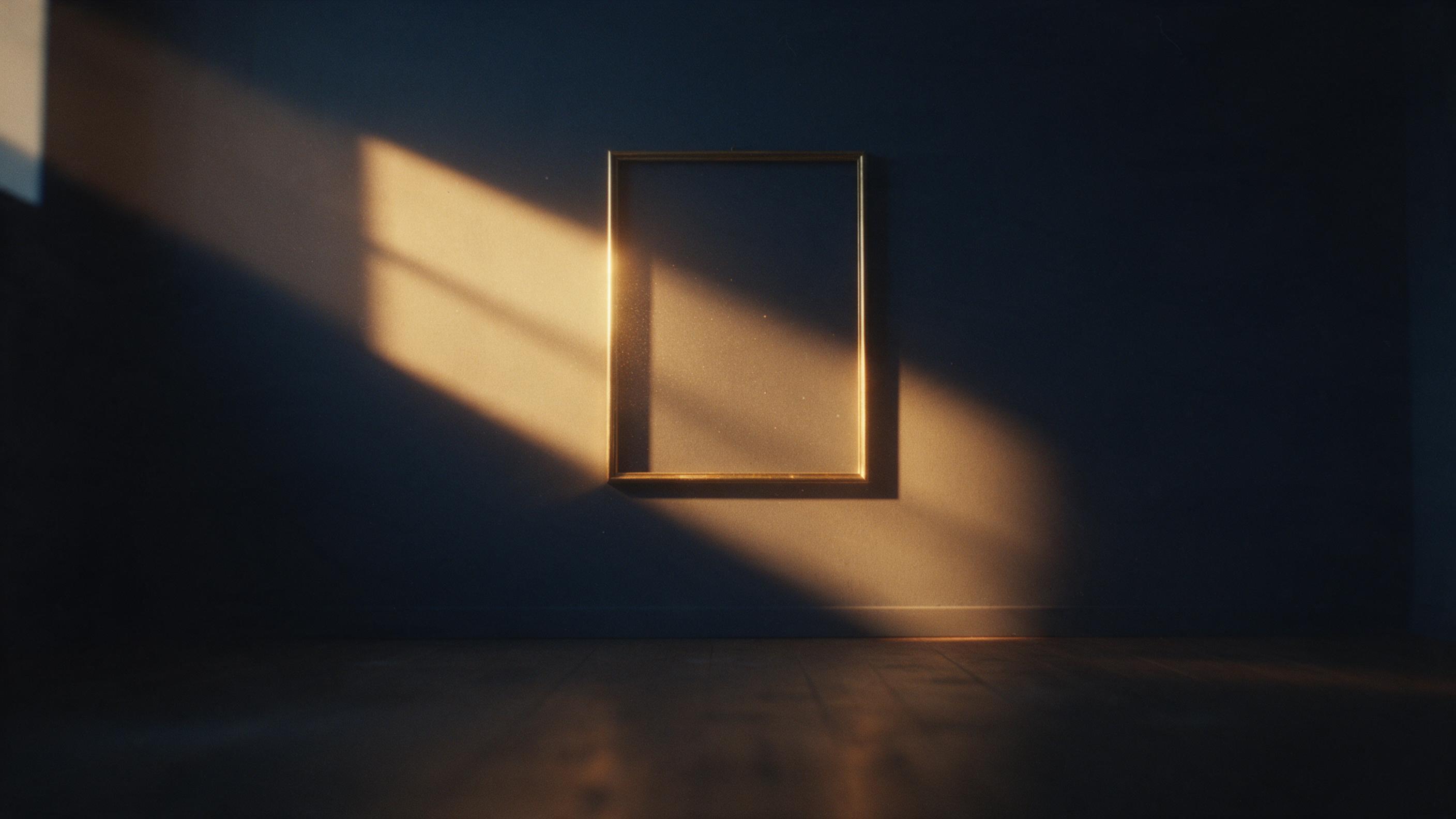
Take It Out Until Nothing Is Left
The strongest film look is not more machinery, it is less of it aimed better. 6 techniques, and every 1 of them removes something until nothing stands between the viewer and the subject.
Six Techniques And Every One Removes Something
The look people try to copy is not a filter and it is not a camera. It is 6 techniques and every 1 of them takes a thing away. Shallow focus removes the competing background. A dead centre removes the scan. Handheld removes the polish. Natural light removes the artifice. Celluloid and a mist filter remove the digital sheen. 2 focal lengths, 50 millimetres and 80 millimetres, remove everything past the point where the frame stops feeling like a window. Past those 2 numbers the immersion of the shot drops away. 6 moves. 0 additions. That is the whole method, and it is why the work reads as severe rather than expensive. A shot built by subtraction has nowhere for the eye to go except the subject, and the subject is the only thing you were ever selling. Start with the frame, then pick the 2 numbers that carry it. Everything else in this piece is a detail hanging off those 2 decisions.
Own The Eye: Wide Open And Dead Centre
The aperture is the control. Lower f-stop, wider opening, more light through it, thinner band in focus. The baseline is wide open, f/1.4 to f/2.8, and that thin band does 1 job: it locks the viewer on the subject and stops a busy background from competing for the glance. There is 1 problem with it. Wide open in daylight overexposes the frame. The fix is not to stop down, because stopping down gives back the background you just removed. Keep the 180 degree shutter angle so the motion blur stays natural, and hold the low f-stop with a variable neutral density filter while the shutter sits at 180 degrees. A neutral density filter is sunglasses for the lens. It dims what arrives without touching the look of it. Then the other half of owning the eye. Centre punch the subject. Dead centre, with the monitor guidelines switched on to hold it there, because the eye drifts a few per cent off centre whenever it is left alone. That is not a rule film schools teach. It is the reason a viewer does not have to hunt for the subject in every shot. A viewer who is not searching is not leaving. No work means no exit from the story.
Three Layers In One Flat Frame
A 2D frame reads as depth when 3 planes sit in the same shot: foreground, mid-ground and background. Miss 1 of the 3 and the image goes flat no matter how good the light is. The foreground plane is the 1 most people skip, and there is a move that builds it in a single decision. Park a character out of focus with their back to camera on the right side of the frame, and keep the real subject sharp behind them. 1 move buys 3 things at once. Depth, because there is now something nearer than the subject. Distance, because the out-of-focus figure reads as standing between the camera and the moment. And the feeling of watching, because a person whose face you cannot see, placed at the edge of frame, turns the audience into an observer of something private. It is 1 character, 1 side of frame, 1 focus plane. Nothing is added to the shot. Something is withheld from it.
Take Away The Polish, Then Take Away The Light
Handheld, and the frame reads as documentary rather than produced. The camera is supported by the operator, hands and shoulder only. A shoulder rig moves with the operator, tracks the subject and stays relatively stable, which is why the tools exist in the first place. Tilta, SmallRig and PolarPro all build the class of gear that does it. The instability is the point. A locked-off frame says someone arranged this. A slightly moving frame says someone was there. That is the whole trade, and it also happens to speed up a shoot, because a shot that does not need to be perfectly settled does not need 10 minutes of settling. Then take away the lighting rig. Natural light only. Sunlight and practicals, no artificial units on set at all, because the uncovered expression of a person standing in real light does something no diffusion panel can fake. The fastest route in is a window. Put the subject near 1 and the work is 80 per cent done. The exception is the 1 controlled light that earns its place: split lighting. Light half the face, leave the other half in shadow. It is the default for tension and interior conflict, and it costs nothing, because it is a decision about where the subject stands rather than a piece of equipment.
Subtraction is the technique. The gear is just how you subtract.
Take Away The Sheen, Keep Two Lenses
Celluloid differs from digital in 3 ways that matter: dynamic range, colour response and texture. You cannot shoot 70 millimetre IMAX to get it, but you can emulate it. A LUT plus a film-emulation plugin carries the 35 millimetre grain, the halation and the celluloid response curve, and Dehancer runs inside Final Cut Pro, DaVinci Resolve and Premiere Pro. The rule that comes with it is the important part. Bake nothing into capture. The grade is the look, so it happens in post, never in camera, because a baked-in look can only be argued with and never undone. 1 more removal finishes the texture. A mist filter diffuses incoming light into a hazy glow, and it is the cheapest way to take the hard digital edge off a frame that is otherwise correct. Then the 2 numbers that carry the whole film. The IMAX sweet spots are 50 millimetres and 80 millimetres, and past those 2 focal lengths the immersion of the image starts dropping away. The crop factor from 70 millimetre IMAX to a full frame sensor is 1.97, which turns those 2 numbers into 25 millimetres and 40 millimetres. On an APS-C sensor add 1.5 to 1.6 on top of that. A Blackmagic Pocket Cinema 6K works out near 16 millimetres and 25 millimetres, and 35 millimetres is the film grain that finishes the texture. Then pair them properly. The wider lens takes the close-ups, the longer 1 takes the over-the-shoulder shots. 2 focal lengths, 1 film, no zoom hunting in between.
What Can You Take Out
Name the lens and the film stock together, every time. Those 2 words are the cheapest moves available, because a model with no focal length and no film reference does not stay quiet. It fills the gap with its own generic gloss, and the result reads as generated before anyone can say why. There are 6 slots to fill and the order does not matter: composition, focal length, depth of field, light, movement and film look. Fill 5 and leave the lens out and the shot drifts to a vague mid-telephoto softness that has no author. A render that reads as 50 millimetres on paper and 35 millimetres in the eye has an author. One that names neither does not. Fill all 6 and the frame has a spine. Built companies across twelve countries. Restructured a EUR 75 million industrial group. Deployed 210 energy systems across Africa and Asia. Took a company through a Frankfurt IPO. Entrade built 200 wood-gasification machines across the UK and Europe. 16 years of field work from rural Nigeria to Fukushima. 393 pages in paperback and Kindle, published 8 April 2026. Nobody in that list was competing on equipment. Every 1 of them was competing on what they were willing to leave out. So the rule is 1 question, asked of every shot before it is final. What can I take out so the viewer is left alone with the subject? The probability that a frame with everything in it reads as generic is close to 1. The probability that 1 more removal fixes it is close to 1 as well, and the only reason a shot ever gets there is that someone was willing to strip the frame they had already built. Take it out until nothing is left between the viewer and the subject. Own the eye. Withhold the face. Never add what you can remove.
A dead centre means nobody has to hunt for the frame they are already watching.
The map is dead. Nobody told you.
Bali State of Mind is the survival guide for the collapse of everything you were taught to believe.
Beyond this book
Building the same thing somewhere else.
Julien Uhlig is available for advisory work, board seats and media appearances. Write to media@exventure.co.
The academy that trains the operators, across every company in the group, is EX Epic Academy - 25,000 applications, 25 seats per cohort, 210 alumni across 19 countries. academy.epicsolutiongroup.com
18-20 November. Online, Las Palmas, Bali.
Three days on what happens to work, capital and institutions when the map stops matching the ground. Seats are limited by cohort.
ex-aisummit.com →