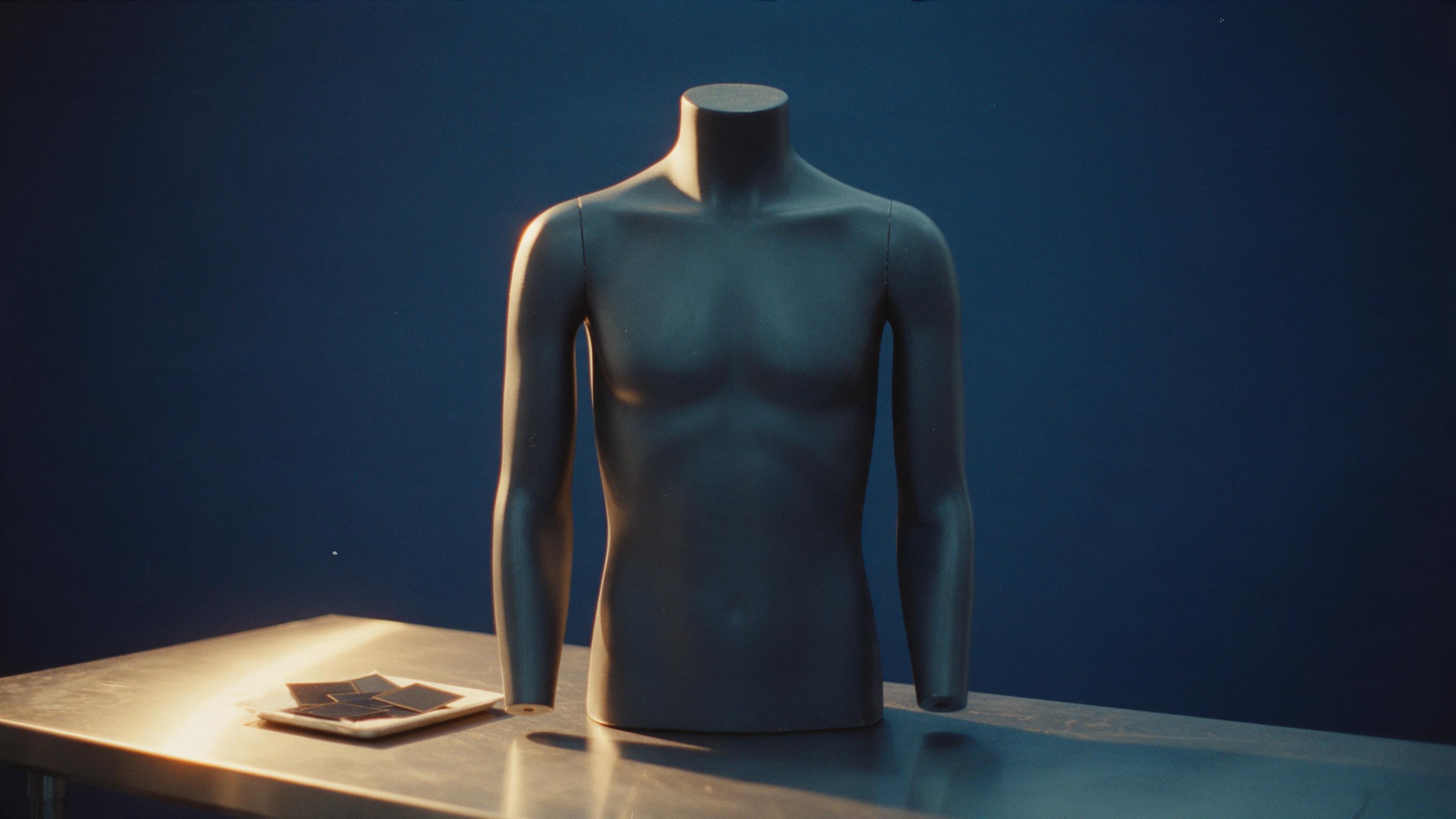
Nobody Has Skinned The Whole Robot
No humanoid robot built through 2026 ships with whole-body high-resolution electronic skin. Tesla Optimus has announced no skin partner, Figure 01 senses pressure in the fingers, 1X and Agility sense force in the feet or the body, Boston Dynamics keeps the work in-house and Apptronik runs a research collaboration. The revenue sits in narrow niches instead: Tekscan at 50 to 100 million dollars in medical pressure mapping, ATI at 50 to 100 million in force-torque, GelSight at more than 40 million raised for vision-based tactile sensing. The largest opening in the field is being left open by the companies with the most to gain from it.
Six Companies, Six Niches, One Missing Product
The commercial side of electronic skin is not one market. It is six small ones that happen not to overlap. Tekscan sells pressure mapping systems built on printed force-sensing resistors and books an estimated 50 to 100 million dollars a year out of medical, automotive and industrial work. ATI Industrial sells strain-gauge force-torque sensors into industrial robotics for the same order of revenue, 50 to 100 million. Sensortech puts capacitive arrays into factories for 10 to 50 million. Wacoh Tech sells 6-axis capacitive and MEMS force sensors for 10 to 50 million. Pressure Profile Systems sells capacitive flexible grip sensors into robotics and consumer products for 5 to 10 million. SynTouch built the BioTac, a hydroacoustic fingertip that read impedance, reached about 5 million dollars and was acquired in 2022. Six companies, six niches, six customer lists that never meet. Every one of them grew by solving one measurement problem for one buyer. Not one of them is a robot skin company.
The New Money Went To Cameras And Fingertips
The recent capital moved where the physics is easiest to demonstrate. GelSight, an MIT spinout, has raised more than 40 million dollars for vision-based tactile sensing. The shortcut there is a good one: put a camera behind a soft elastomer, photograph the deformation, infer the contact. Xela Robotics in Japan runs the same idea at the fingertip on a seed round. FlexEnable has raised over 50 million for flexible display backplanes, which is the readout layer a skin would need whether or not anyone builds the skin. BeBop Sensors has 20 million dollars of funding into stretchable fabric sensors for motion capture and pressure mats. Tactile Robotics works on MEMS tactile arrays from a seed round, and Soft Tactile Sensing in the United Kingdom builds capacitive skin for surgical robotics, also at seed. TOUCHLAB in Germany is at Series A with e-textile sensor patches for medical monitoring. Read that list again and notice where the capital is aimed. Every one of those companies is solving the fingertip, the surgical tool or the patch. The fingertip is the hardest place in the field to sense anything useful, and it is also the smallest part of the robot.
Six Humanoids, Not One Full Skin
Line up the humanoids that shipped or demoed through 2024, 2025 and 2026 and the tactile column reads the same way every time. Tesla Optimus: no skin partner announced. Boston Dynamics Atlas: high-bandwidth force sensing in the hands, built in-house. Figure 01: pressure sensing in the fingers. 1X Technologies: full-body pressure sensing on Neo, no partner announced. Apptronik Apollo: a tactile palm, through a research collaboration. Agility Digit: force sensing in the feet. That is six programs, three continents and several billion dollars of raised capital, and not one of them has announced full-body high-resolution skin. Most ship simple contact switches. The rest sense pressure in a palm, a finger or a foot. A contact switch tells a robot that something happened. It does not tell the robot where. For anyone who has watched a soft sensor program stall, the shape of that is familiar. A contact switch is a two-state device with no calibration, no drift and no service interval. It is also the only tactile component with a standard test method and a purchase order behind it.
Why The Money Stops At The Wrist
A hand is about 5 per cent of a robot's surface area and close to 95 per cent of the contact that matters. That asymmetry is what makes the current state rational and the opening obvious at the same time. Whole-body coverage changes the arithmetic. A thousand taxels on a 10-millimetre pitch is a strip one metre long and 100 millimetres wide, roughly the forearm of one arm. At a 5-millimetre pitch a single square metre carries 40,000 taxels, so a humanoid with 2 square metres of surface area is being asked for 80,000 of them. Every one of those needs a connection, and every connection has to survive the flexing of every joint it crosses. Then there is calibration. A fingertip can be re-zeroed on every grasp. A shin cannot. The moment a skin covers a body rather than a tip, drift stops being a specification and starts being a maintenance schedule, and a maintenance schedule is a line item somebody has to own. I have built companies across twelve countries and restructured a industrial group, and the pattern that repeats is always the same. A component with no standard test method does not get a budget line. It gets a research collaboration.
A contact switch tells a robot that something happened. It does not tell the robot where.
What A Whole-Body Buyer Would Have To Specify
A whole-body skin in a purchase order looks nothing like a fingertip sensor on a datasheet. Six fields decide whether it is buyable. Coverage in square metres, stated as a range rather than a number, because a shoulder and a forearm do not want the same material. Taxel pitch, which sets both the smallest feature the robot can feel and the wiring count. Force range, from the lightest touch that must register to the hardest that must not damage the sensor. Readout, meaning whether the array multiplexes through a matrix or needs a channel per taxel, and what that does to the harness at each joint. Service interval, which is where drift and fatigue get converted into a number somebody can plan around. And the failure mode the buyer will accept, because the honest answer for most soft materials is a dead region rather than a false reading. Nothing in the current catalogue fills those six fields. The companies that could fill four of them sell into medical pressure mapping, industrial force-torque or factory capacitive arrays, and the buyer asking for the other two does not exist yet. Six companies, six niches, six customer lists that never meet. Not one of them is a robot skin company.
The Opening Is A Procurement Decision
So the largest commercial opening in electronic skin is being left open by the companies with the most to gain from it, and the reason is not technical. Tesla, Figure, 1X, Agility, Boston Dynamics and Apptronik all have the unit volume that would justify a skin program. Not one of them has announced a full-body partner. Each of them is shipping a product with contact switches in the fingers and pressure sensing in a palm, which works, sells and needs no new supplier qualification. The probability that a humanoid program qualifies a whole-body skin supplier before it has shipped 1,000 units is low, and the reason has nothing to do with the sensors. It is that no test method exists to qualify against, so the risk sits on the robot maker's side of the table with no ceiling on it. The probability that a niche supplier writes that test method first is low for the same reason: the niche is comfortable, the margin is real, and nobody in medical pressure mapping has ever needed to cover a shin. Until somebody takes that risk on purpose, the opening stays open. The seven companies above keep their 50 to 100 million dollar franchises, the humanoids keep their contact switches, and the most valuable surface in robotics stays unclaimed.
The companies with the most to gain from whole-body skin are the ones that have announced the least.
The map is dead. Nobody told you.
Bali State of Mind is the survival guide for the collapse of everything you were taught to believe.
Beyond this book
Building the same thing somewhere else.
Julien Uhlig is available for advisory work, board seats and media appearances. Write to media@exventure.co.
The academy that trains the operators, across every company in the group, is EX Epic Academy - 25,000 applications, 12 per cohort, 200+ alumni across 19 countries. academy.epicsolutiongroup.com
18-20 November. Online, Las Palmas, Bali.
Three days on what happens to work, capital and institutions when the map stops matching the ground. Seats are limited by cohort.
ex-aisummit.com →