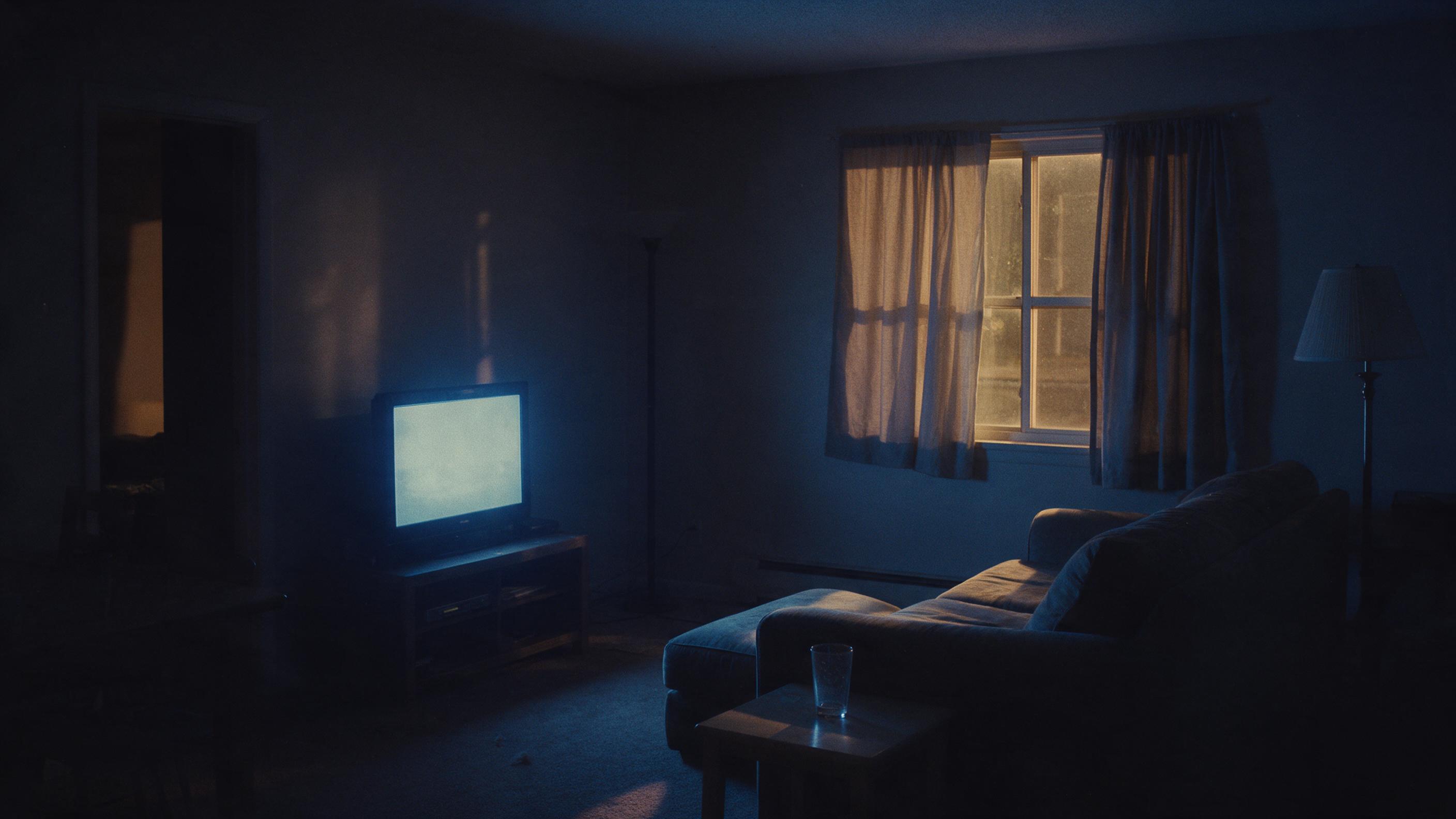
The Consumer Trap: How the Hours Between 5PM and 1AM Are Destroying Your Future
Every evening, the attention economy colonizes your most creative hours. Scrolling, streaming, ordering — a perfectly engineered extraction machine. The difference between the creator class and the consumed class comes down to what you do after dinner.
Marcus, 11pm on a Tuesday
A studio apartment in London. £900 a month, most of a £22,000 salary. He is lying in bed and he is not sleeping. Instagram shows him Barcelona in golden light. TikTok takes twenty minutes and leaves him with nothing. YouTube was supposed to be a documentary about climate change and has become people who quit their jobs and moved to Bali. On the nightstand, £18 of Thai food — three nights a week, £216 a month — for a meal that cost £4 to make. On the wall, four streaming services he does not watch. On his desk, a £35 gym membership unused for three months. His card statement says £2,400 spent against £1,600 of take-home pay. He falls asleep with the phone on his chest and checks it again at 2am.
You Are Not the Customer
Social media is not a free service you are using. Your attention is the product, sold to advertisers, and the platform is not built to connect you with your friends — that part is the honeypot. The algorithm learns exactly what makes you stop scrolling and shows you more of it, whether or not it is true and whether or not it is good for you. Infinite scroll was designed so the activity never signals completion. A newspaper ends. The feed does not. And it replaces real connection with a simulation of it: eight hundred people you barely know, each showing an edited reel, against which you compare your full reality — the rent, the boss, the argument with your partner.
The Removal of Friction Is the Business
Delivery is not about convenience, it is about dependency. You pay a thirty per cent markup for the privilege of not cooking, and every time you do, a skill your grandmother had goes one generation further out of reach. Subscriptions are designed to be invisible: £9 a month does not feel like much until it is fifteen of them. Netflix, Spotify, Apple TV, Disney+, a meditation app, a language app. One hundred and fifty to two hundred pounds a month on things you barely use — £1,800 to £2,400 a year. Cancelling takes ten minutes and a survey. The monthly charge does not.
The Gap Is the Product
The consumer economy depends on your dissatisfaction. Satisfaction would be a catastrophe for it. The system is built to maintain the distance between who you are and who you believe you should be, and advertising is simply the discipline of making you feel that distance. I lived inside it. I was the Maybach Man in Sardinia, spending ten thousand euros on dinner, on television, at what was supposed to be the pinnacle. I was exhausted and miserable, spending all my energy maintaining the appearance. Caffè Taci looked extraordinary from the outside and was burnout from the inside, three bottles of Chianti a night to manage the stress of it. And I had the privilege to burn out. Most people do not.
You're not the customer. You're the product — and the product is extracted of value, hour by hour, every single night.
Bali Has No Consumer Culture
Status here does not come from possessions. Nobody is impressed by the brand of your shoes. Prestige comes from your place in a community that depends on you — your role in the ceremonies, whether your neighbours know you, whether you turn up when something needs building. A comfortable life costs eight hundred dollars a month if you are frugal and fifteen hundred if you are living well. When tourism collapsed in 2020, hotels and restaurants closed and the income that had been subsidising community life disappeared overnight. Neighbours helped neighbours. People planted seaweed, raised fish, grew vegetables, processed coconuts. Nobody starved. The community held, because the social infrastructure had been built over centuries.
The 5pm-to-1am Window Decides Your Future
Your job pays the bills. That is all it does. Average tenure in a job is four years; the job is not where you build wealth, and it is not where you build the capabilities that will matter when the system shifts. Two hours a night, five nights a week, is roughly one year of full-time work over five years — 3,650 hours. In one version you spend them creating something that might grow without you. In the other you spend them extracting value someone else created, and you finish with the memory of what you watched. The job you have might not exist in five years. The degree might not be worth what you paid. The people who survive that are the people who spent those hours building, not the people who spent them consuming. Calculate the probability that your job, your industry and your city still work in five years. Most people price that at zero. It is not zero.
The system wants you exhausted. Exhausted people consume. Rested people create.
The map is dead. Nobody told you.
Bali State of Mind is the survival guide for the collapse of everything you were taught to believe.
Beyond this book
Building the same thing somewhere else.
Julien Uhlig is available for advisory work, board seats and media appearances. Write to media@exventure.co.
The academy that trains the operators, across every company in the group, is EX Epic Academy - 25,000 applications, 25 seats per cohort, 210 alumni across 19 countries. academy.epicsolutiongroup.com
18-20 November. Online, Las Palmas, Bali.
Three days on what happens to work, capital and institutions when the map stops matching the ground. Seats are limited by cohort.
ex-aisummit.com →